
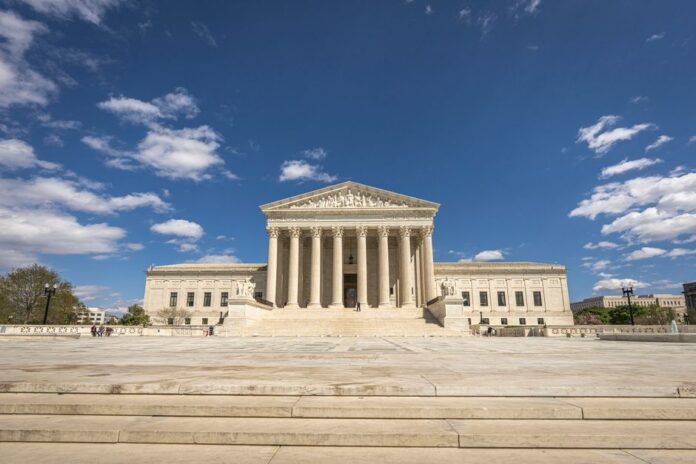
Photo: Mark Stebnicki / Pexels
By The News Beacon Newsroom, National Desk — Published September 1, 2026
Table of Contents
- Key Takeaways
- The Background & Context
- Why This Matters
- Reactions & Analysis
- What Happens Next
- Frequently Asked Questions
The Trump administration has turned to the nation’s highest court in an urgent bid to keep a controversial White House construction project moving forward. Trump officials asked the Supreme Court to allow work on a new ballroom to proceed even as legal challenges wind through the federal courts. The request represents the latest flash point in ongoing tensions between the executive branch and those who question whether the project serves the public interest or violates procedural safeguards.
The appeal to the Supreme Court came after lower courts had raised concerns about the construction. According to multiple reports, the justices granted at least temporary relief, permitting the ballroom work to continue for now. That interim decision buys the administration time but leaves fundamental questions unresolved.
The case has drawn attention not only for its immediate implications but also for what it reveals about the interplay between presidential prerogative, judicial oversight, and the use of federal property. For taxpayers and civic watchdogs alike, the dispute underscores how decisions about government facilities can become legal battlegrounds with consequences that ripple far beyond the White House grounds.
Key Takeaways
- Trump administration officials filed an emergency request with the Supreme Court seeking permission to continue construction of a White House ballroom during an ongoing legal appeal.
- The Supreme Court granted interim relief, allowing the construction project to move forward at least temporarily while the broader legal questions are litigated.
- Lower courts had previously expressed concerns about the project, prompting the administration to escalate the matter to the nation’s highest judicial body.
- The case highlights tensions between executive authority over federal property and legal requirements governing construction and environmental review.
- The decision carries implications for how future administrations manage White House renovations and whether courts will intervene in such projects.
- Observers are watching to see whether the Supreme Court will eventually take up the underlying merits of the case or leave the matter to lower courts.
The Background & Context
White House construction and renovation projects have long been a source of both practical necessity and political controversy. Presidents routinely update the executive mansion to accommodate modern security needs, technological advances, and ceremonial functions. But not all projects sail through without scrutiny.
The proposed ballroom has become a focal point because it represents a significant addition to the White House complex. Details about the scope, cost, and purpose of the facility have been subjects of public debate. Critics have questioned whether proper environmental assessments were completed and whether the project adheres to federal regulations governing construction on historic or sensitive sites.
When legal challenges emerged, they forced the administration to defend not just the ballroom itself but the process by which it was approved. Lower courts appeared receptive to arguments that the project might have bypassed required reviews. Those rulings set the stage for the administration’s emergency appeal to the Supreme Court.
The Trump administration argued that halting construction would cause significant disruption and expense. Stopping and restarting large-scale building projects often leads to cost overruns, contract disputes, and delays that can stretch for months or years. From the government’s perspective, allowing work to continue while legal questions are resolved represents a practical compromise that protects taxpayer dollars and keeps the project on schedule.
Opponents, however, contend that letting construction proceed defeats the purpose of judicial review. If the courts ultimately rule that the project violated environmental or procedural laws, a completed or partially completed ballroom would present a fait accompli. Undoing construction is far more difficult than preventing it in the first place.
Why This Matters
For American citizens, the ballroom dispute is about more than bricks and mortar. It touches on fundamental questions of governmental accountability and the rule of law. Can an administration move forward with a major construction project while legal challenges are pending? What safeguards exist to ensure that federal property is managed in accordance with statutory requirements?
Taxpayers have a direct stake in the outcome. Construction projects at the White House are funded by public dollars. If courts determine that the ballroom was approved improperly, citizens could be left paying for a facility that should never have been built. Alternatively, if construction is halted and the project ultimately receives legal approval, delays could inflate costs significantly.
The case also reflects broader debates about executive power. Presidents enjoy considerable discretion over the operation and maintenance of the White House. But that authority is not unlimited. Federal environmental laws, historic preservation statutes, and administrative procedures apply even to the executive mansion. When those rules clash with presidential priorities, courts are often called upon to referee.
Environmental advocates see the dispute as a test of whether established review processes will be honored or bypassed in the name of expediency. If the administration prevails without having to satisfy all regulatory requirements, it could set a precedent that weakens protections in other contexts. Conversely, if courts impose strict procedural hurdles, future presidents may find it harder to make timely improvements to federal facilities.
The Supreme Court’s interim decision to let construction continue signals that the justices are not prepared to impose an immediate halt. But it does not resolve the underlying legal questions. The temporary nature of the relief means the administration must still defend its actions in the lower courts and potentially before the Supreme Court again if the case advances.
Reactions & Analysis
Legal experts have offered varied interpretations of the Supreme Court’s decision to allow construction to proceed. Some view it as a routine procedural move, reflecting the Court’s reluctance to interfere with executive operations without a full hearing on the merits. Others see it as a signal that the justices are sympathetic to the administration’s arguments about the costs and complications of halting an active construction site.
The fact that the Court acted quickly suggests that the justices recognized the urgency of the request. Construction projects operate on tight schedules, and even brief delays can have cascading effects. By granting interim relief, the Court preserved the status quo while giving itself time to consider whether to take up the case more fully.
Critics of the administration have expressed frustration that the ballroom is moving forward despite unresolved legal questions. They argue that the Supreme Court’s decision prioritizes convenience over compliance. If environmental or procedural violations occurred, allowing construction to continue rewards the administration for acting first and seeking permission later.
Supporters counter that the administration followed appropriate channels by seeking judicial approval rather than simply ignoring lower court concerns. They note that emergency appeals to the Supreme Court are a standard part of the legal process, especially when government operations are at stake. From this perspective, the Court’s decision reflects a pragmatic balancing of competing interests rather than a rubber stamp of executive action.
What Happens Next
The immediate future of the ballroom project appears secure. With the Supreme Court’s blessing, construction can continue while the legal battle plays out. But the longer-term outlook remains uncertain.
Lower courts will continue to examine whether the administration complied with all applicable laws when it approved the project. Those proceedings could take months, and their outcome is far from guaranteed. If the administration ultimately loses, it may face difficult choices about whether to modify or even remove parts of the ballroom to bring the project into compliance.
The Supreme Court could also decide to hear the case on the merits, especially if lower courts issue conflicting rulings or if the legal questions are deemed sufficiently important. A full Supreme Court decision would provide clarity not only for this project but for future disputes involving federal construction and environmental review.
Political dynamics will also play a role. Public opinion about the ballroom may influence how aggressively the administration defends the project and how willing opponents are to continue their legal fight. If the controversy fades from public attention, the case could be resolved quietly through settlement or procedural rulings. If it remains a flashpoint, expect continued litigation and media scrutiny.
For now, the construction workers are back on the job. The sound of hammers and machinery echoes across the White House grounds. But the legal and political reverberations of this dispute will likely be heard for some time to come.
Frequently Asked Questions
What is the White House ballroom project?
The project involves construction of a new ballroom at the White House complex. Details about its size, purpose, and cost have been subjects of public discussion. The facility is intended to serve ceremonial and diplomatic functions, but legal challenges have raised questions about whether the project received proper environmental and procedural approvals before construction began.
Why did Trump officials go to the Supreme Court?
The administration filed an emergency appeal after lower courts raised concerns about the construction project. Trump officials argued that halting work would cause significant delays and cost overruns. By asking the Supreme Court to allow construction to continue during the appeal process, the administration sought to avoid the disruptions associated with stopping and restarting a major building project.
What did the Supreme Court decide?
The Supreme Court granted interim relief, permitting the ballroom construction to proceed at least temporarily. This decision does not resolve the underlying legal questions about whether the project complies with federal environmental and procedural laws. Instead, it maintains the status quo while the case continues through the courts, allowing construction to move forward without prejudging the final outcome.
What are the broader implications of this case?
The dispute has implications for how future administrations manage White House renovations and whether courts will intervene in such projects. It raises questions about the balance between executive authority over federal property and legal requirements governing construction. The outcome could influence environmental review processes, historic preservation efforts, and the extent to which presidents must navigate judicial oversight when making changes to government facilities.
As the legal proceedings unfold, Americans will be watching to see whether the courts uphold the administration’s approach or require changes to how such projects are approved and executed. The ballroom may serve as a venue for state dinners and diplomatic receptions. But for now, it stands as a monument to the ongoing tensions between presidential power and the rule of law.


