
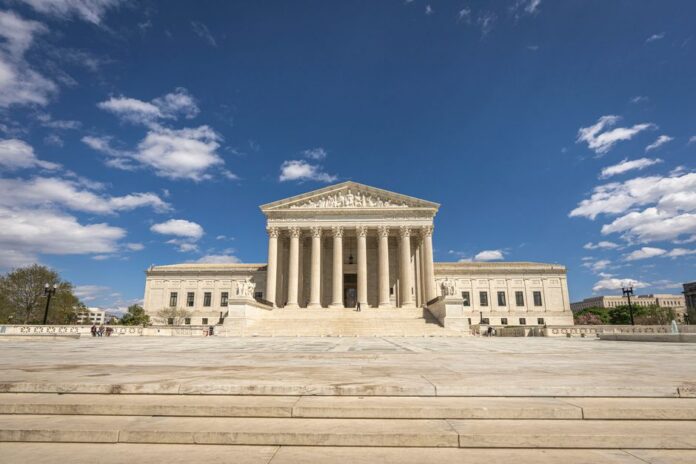
Photo: Mark Stebnicki / Pexels
By The News Beacon Newsroom, National Desk — Published September 23, 2026
Table of Contents
- Key Takeaways
- The Background & Context
- Why This Matters
- Reactions & Analysis
- What Happens Next
- Frequently Asked Questions
The Trump administration has escalated a contentious immigration case to the nation’s highest court, seeking permission to detain a pro-Palestinian scholar whose status has become a flashpoint in debates over national security, free speech, and executive authority. The move represents a significant test of federal power to hold individuals deemed security risks while their immigration cases wind through the courts.
This appeal to the Supreme Court comes as the Trump administration asks for broader latitude in immigration enforcement actions, particularly involving individuals whose political activism intersects with Middle Eastern politics. The case has drawn attention from civil liberties advocates and immigration law experts who see it as emblematic of tensions between government security concerns and constitutional protections.
The scholar’s detention has already sparked legal battles in lower courts, with the administration now turning to the Supreme Court as the final arbiter. The outcome could set precedent for how the Department of Homeland Security handles similar cases involving political speech and immigration status.
Key Takeaways
- The Trump administration has filed an emergency request with the U.S. Supreme Court to permit the Department of Homeland Security to detain a pro-Palestinian scholar.
- The case centers on the federal government’s authority to hold individuals during immigration proceedings when national security concerns are cited.
- Lower courts have previously weighed in on the scholar’s detention, leading to this high-stakes Supreme Court appeal.
- The matter raises fundamental questions about the balance between executive power in immigration enforcement and individual rights to due process and free expression.
- Civil liberties organizations are closely monitoring the case as a potential precedent for government authority over political activists in immigration proceedings.
- The Supreme Court’s decision could have far-reaching implications for how federal agencies approach detention in politically sensitive immigration cases.
The Background & Context
Immigration detention has long been a contentious area of American law, where national security imperatives collide with constitutional guarantees. The federal government maintains broad authority to detain non-citizens during removal proceedings, but that power is not unlimited. Courts have consistently grappled with where to draw the line between legitimate security concerns and indefinite detention without adequate due process.
The current case fits within a broader pattern of immigration enforcement actions that have intensified focus on individuals whose political activism or speech relates to Middle Eastern conflicts. Pro-Palestinian advocacy has become particularly scrutinized in recent years, with government officials sometimes citing such activism as grounds for enhanced vetting or enforcement actions.
The Department of Homeland Security operates under statutory frameworks that permit detention of non-citizens under various circumstances, including when they are deemed flight risks or potential dangers to the community. However, prolonged detention without bond hearings or clear timelines has faced legal challenges, with courts sometimes ruling that indefinite holds violate constitutional protections.
Academic freedom and political speech protections add another layer of complexity. Scholars and activists have historically enjoyed robust First Amendment protections for their political views and advocacy work. When immigration status intersects with controversial political positions, the legal questions become particularly thorny.
Why This Matters
For American citizens and residents, this case touches on fundamental questions about government power and individual liberty. Even those not directly involved in immigration proceedings have a stake in how courts define the limits of executive authority, particularly when political speech is involved.
The precedent set here could influence how federal agencies approach thousands of immigration cases annually. If the Supreme Court grants the administration broad detention authority based on security assertions, it could embolden more aggressive enforcement actions. Conversely, a ruling limiting such power would reinforce judicial oversight of executive decisions.
Taxpayers fund both immigration enforcement and the detention facilities that house individuals awaiting proceedings. The costs of prolonged detention are substantial, raising questions about resource allocation and whether such expenditures serve genuine security needs or reflect political priorities.
Universities and research institutions are watching closely. Academic communities value the free exchange of ideas, including controversial political positions. If scholars face detention or deportation based on their advocacy work, it could chill academic discourse and international scholarly collaboration.
The case also reflects broader societal tensions around Middle Eastern politics and how American institutions handle dissenting voices on Israel-Palestine issues. These debates have intensified on college campuses and in public discourse, making the legal framework governing such speech increasingly consequential.
Reactions & Analysis
Legal experts note that the Supreme Court’s docket increasingly features immigration cases that test executive authority. The current conservative majority has shown varying degrees of deference to government security claims, making predictions about this case’s outcome uncertain.
Civil liberties organizations have historically opposed prolonged detention without adequate judicial review, arguing it violates due process guarantees. They contend that national security concerns, while legitimate, cannot become blanket justifications for indefinite holds, particularly when political speech is the underlying issue.
Immigration enforcement advocates counter that the government must have tools to protect national security, even when those tools involve restricting individual liberty. They argue that non-citizens lack the same constitutional protections as citizens and that courts should defer to executive branch expertise on security matters.
Constitutional scholars point out that even non-citizens on American soil enjoy certain fundamental rights, including due process protections. The question becomes how robust those protections must be when balanced against asserted security needs.
The timing of this Supreme Court petition is significant. With ongoing debates about campus protests, Middle Eastern politics, and free speech boundaries, the case arrives at a moment of heightened political sensitivity around these issues.
What Happens Next
The Supreme Court will first decide whether to grant the administration’s emergency request or allow lower court rulings to stand while the case proceeds through normal channels. Emergency applications receive expedited consideration, though the Court is not obligated to grant them.
If the justices agree to hear the case fully, oral arguments would follow, likely in the coming months. The Court’s decision could come before the end of its current term, potentially reshaping detention authority for years to come.
Meanwhile, the scholar at the center of this case remains in legal limbo. The outcome will directly determine whether detention continues or release is ordered pending final resolution of the underlying immigration matter.
Immigration attorneys are preparing for ripple effects. Whatever the Supreme Court decides will influence how they advise clients, particularly those whose cases involve political activism or controversial speech. Government lawyers will similarly adjust their strategies based on the precedent established.
Congressional oversight may intensify depending on the ruling. Lawmakers from both parties have expressed concerns about various aspects of immigration detention policy, though they differ sharply on solutions. A Supreme Court decision could catalyze legislative action or further entrench existing divisions.
Frequently Asked Questions
What is the Trump administration specifically asking the Supreme Court to do?
The administration is requesting that the Supreme Court allow the Department of Homeland Security to detain a pro-Palestinian scholar during immigration proceedings. This involves overturning or staying lower court decisions that may have limited the government’s detention authority in this particular case.
Does this case affect only one individual or could it have broader implications?
While the immediate case involves one scholar, the Supreme Court’s ruling would establish legal precedent affecting how federal agencies can detain individuals in similar circumstances. The decision could influence thousands of immigration cases, particularly those involving political activism or national security claims.
What constitutional issues are at stake in this detention case?
The case raises questions about due process rights, the limits of executive detention authority, and potentially First Amendment protections for political speech. Courts must balance the government’s legitimate security interests against individual rights to liberty and fair legal proceedings, even for non-citizens on American soil.
How quickly will the Supreme Court decide this matter?
The timeline depends on whether the Court treats this as an emergency application or allows it to proceed through normal channels. Emergency requests can receive decisions within days or weeks, while full cases typically take months from the time the Court agrees to hear them until a final ruling is issued.
As this case moves forward, it will test fundamental principles about power, liberty, and justice in America’s immigration system. The Supreme Court’s eventual decision will resonate far beyond one individual’s circumstances, shaping the landscape of immigration enforcement and constitutional protections for years ahead. Both supporters and critics of expanded detention authority await the Court’s response with keen interest.


