
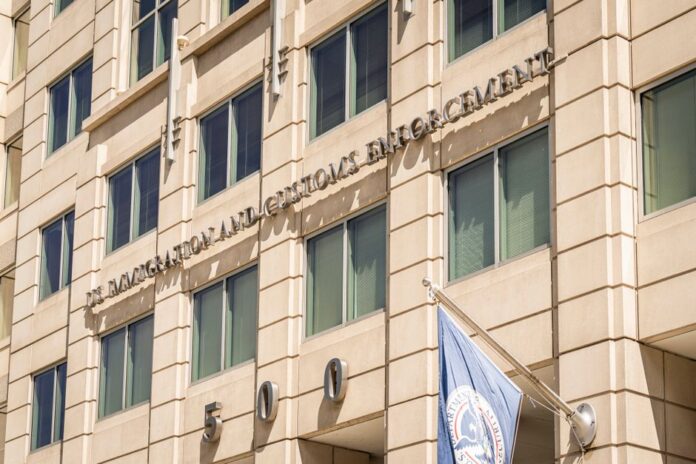
Photo: Mark Stebnicki / Pexels
By The News Beacon Newsroom, National Desk — Published September 20, 2026
Table of Contents
- Key Takeaways
- The Background & Context
- Why This Matters
- Reactions & Analysis
- What Happens Next
- Frequently Asked Questions
The federal government has launched a new interagency center designed to combat fraud across multiple government programs by enabling unprecedented data-sharing between law enforcement and oversight agencies. The initiative, spearheaded by the Department of Justice, represents a significant shift in how federal authorities coordinate their efforts to detect and prevent fraudulent schemes that drain billions from taxpayer-funded programs each year.
This center brings agencies together in a unified mission to identify patterns of fraud that might otherwise slip through the cracks when departments operate in silos. By creating a centralized hub for data analysis and intelligence sharing, federal officials aim to close gaps that sophisticated criminals have long exploited.
The move comes at a time when fraud against government programs—from healthcare and disaster relief to defense contracts and social services—continues to cost American taxpayers staggering sums annually. The new collaborative approach signals recognition at the highest levels that traditional methods of fraud detection are insufficient in an era of increasingly complex and coordinated criminal activity.
Key Takeaways
- The Department of Justice has established a new center dedicated to detecting fraud across federal programs through enhanced interagency cooperation.
- The center brings agencies together to share data and intelligence in ways previously hindered by bureaucratic boundaries and siloed information systems.
- Federal authorities aim to identify fraud patterns that span multiple government programs, making detection easier through coordinated analysis.
- The initiative addresses growing concerns about billions in taxpayer dollars lost annually to sophisticated fraud schemes targeting everything from healthcare to defense contracts.
- Multiple agencies will participate in the centralized data-sharing unit, pooling resources and expertise to combat increasingly complex criminal operations.
- The center represents a fundamental shift in federal law enforcement strategy toward prevention and early detection rather than solely reactive prosecution.
The Background & Context
For decades, federal agencies have struggled with a fundamental problem: criminals don’t respect organizational boundaries, but government agencies often operate as if those boundaries are insurmountable walls. A fraudster might simultaneously exploit Medicare, Veterans Affairs benefits, and disaster relief programs, but the agencies administering those programs rarely communicated effectively enough to spot the pattern.
The fragmented nature of federal fraud detection has long frustrated investigators and oversight officials. Each agency maintains its own databases, uses different analytical tools, and follows separate protocols for identifying suspicious activity. This disjointed approach creates blind spots that savvy criminals have learned to exploit with devastating efficiency.
Government fraud takes many forms. Healthcare fraud alone costs federal programs tens of billions annually. Defense contractors sometimes inflate costs or bill for work never performed. Disaster relief programs become targets during national emergencies when oversight is stretched thin. Identity thieves file fraudulent tax returns or unemployment claims. Small Business Administration loans get diverted to ineligible recipients or shell companies.
The COVID-19 pandemic laid bare just how vulnerable government programs can be when massive amounts of money flow quickly with reduced verification safeguards. Emergency relief programs, while providing critical lifelines to millions of Americans, also attracted unprecedented levels of fraudulent activity. That experience appears to have catalyzed momentum for more systematic, coordinated fraud prevention efforts.
Previous attempts at interagency coordination existed but often proved limited in scope or hampered by technological incompatibilities, legal restrictions on information sharing, or simple bureaucratic inertia. The new center aims to overcome these obstacles through a more formalized structure with dedicated resources and clear authority to facilitate collaboration.
Why This Matters
Every dollar stolen through government fraud is a dollar that cannot serve its intended purpose. When criminals defraud Medicare, healthcare providers serving legitimate patients may face payment delays or reduced reimbursements. When defense contractors pad invoices, military readiness suffers. When disaster relief funds get diverted, families in crisis go without help.
The fiscal implications extend beyond immediate losses. Fraud detection and prosecution consume additional resources. Agencies must implement more stringent verification procedures that can slow legitimate claims processing. The cumulative effect erodes public trust in government institutions and fuels cynicism about how tax dollars are managed.
For ordinary Americans, government fraud matters in concrete ways. Higher fraud rates can lead to increased scrutiny of legitimate benefit recipients, creating bureaucratic hurdles for people who need help. Fraud losses contribute to program funding shortfalls that may result in benefit reductions or eligibility restrictions. And ultimately, all taxpayers bear the cost of fraud through higher taxes or reduced services.
The new center also carries implications for privacy and civil liberties. Increased data sharing between agencies raises questions about how information is protected, who has access, and what safeguards prevent misuse. Balancing effective fraud detection with individual privacy rights remains an ongoing challenge that will require careful oversight and clear protocols.
From a law enforcement perspective, the center could significantly enhance the government’s ability to pursue complex cases. Many fraud schemes involve multiple jurisdictions and programs, making investigation and prosecution difficult when agencies work independently. Coordinated intelligence sharing should enable prosecutors to build stronger cases and identify criminal networks rather than just individual perpetrators.
Reactions & Analysis
The launch of this centralized fraud detection center has been met with cautious optimism from oversight advocates who have long called for better coordination between agencies. Watchdog organizations that monitor government spending see the initiative as a potentially powerful tool for protecting taxpayer resources, though many emphasize that success will depend on implementation details and sustained commitment.
Legal experts note that the center’s effectiveness will hinge on how well it navigates complex information-sharing laws. Different agencies operate under different statutory authorities regarding data collection and disclosure. Creating a framework that allows meaningful collaboration while respecting these legal boundaries requires careful legal architecture and ongoing compliance monitoring.
Technology specialists point out that data integration poses significant technical challenges. Federal agencies use disparate systems with incompatible data formats. Building the infrastructure to aggregate, analyze, and share information across these systems demands substantial investment in both technology and personnel training. The center’s success may ultimately depend as much on IT capabilities as on policy directives.
Privacy advocates have expressed concerns about mission creep and the potential for expanded surveillance. They argue that while fraud prevention is important, the government must establish clear limits on how data is used and strong protections against unauthorized access or misuse. Some worry that a centralized data hub could become a target for hackers or be repurposed for activities beyond its stated fraud detection mission.
From a practical standpoint, federal employees who work in fraud investigation generally welcome better tools and coordination. Many investigators have experienced the frustration of discovering fraud patterns that cross agency lines but lacking the ability to access relevant information held by other departments. The new center promises to break down these barriers, potentially making investigations more efficient and effective.
What Happens Next
The immediate task facing the new center involves establishing operational protocols and building the technological infrastructure necessary for effective data sharing. This foundational work will likely take months or even years to fully implement, as agencies work through technical, legal, and logistical challenges.
Early priorities will probably focus on the highest-dollar fraud risks—healthcare programs, major disaster relief efforts, and large-scale procurement. These areas offer the greatest potential return on investment for fraud prevention efforts and have well-documented vulnerabilities that coordinated oversight could address.
As the center becomes operational, we can expect to see changes in how agencies approach fraud detection. Rather than waiting for red flags within individual programs, the center should enable proactive analysis that identifies suspicious patterns across multiple programs simultaneously. This shift from reactive to predictive fraud detection could substantially increase the government’s ability to prevent losses before they occur.
The center will also need to develop metrics for measuring success. Traditional measures like prosecution rates and recovered funds tell only part of the story. The real value lies in fraud prevented—money that never gets stolen in the first place. Quantifying prevention is notoriously difficult but essential for demonstrating the center’s worth and justifying continued investment.
Looking further ahead, the center could serve as a model for other collaborative efforts across government. If successful in reducing fraud, the same principles of data sharing and coordinated analysis might be applied to other cross-cutting challenges, from cybersecurity threats to emergency response coordination.
Congress will play a crucial oversight role, monitoring the center’s operations and ensuring it achieves its objectives while respecting legal and privacy constraints. Appropriators will need to decide on funding levels, and authorizing committees may need to address legal barriers to information sharing or provide additional authorities as implementation challenges emerge.
Frequently Asked Questions
What types of fraud will the new center target?
The center will focus on fraud across all federal government programs, including healthcare programs like Medicare and Medicaid, disaster relief funds, defense contracts, tax fraud, unemployment benefits, and other taxpayer-funded initiatives. The goal is to identify patterns of fraudulent activity that span multiple programs or agencies, which have traditionally been difficult to detect when agencies operate independently.
How does this center differ from existing fraud prevention efforts?
Unlike existing efforts that typically operate within individual agencies or programs, this center creates a centralized hub for data sharing and analysis across multiple federal agencies. It enables investigators to see patterns and connections that would be invisible when agencies work in isolation, representing a shift from siloed fraud detection to coordinated, government-wide prevention and investigation.
Will this affect how legitimate benefit recipients interact with government programs?
For most legitimate recipients, the center should be largely invisible in day-to-day interactions. The focus is on backend data analysis and investigation rather than changing how people apply for or receive benefits. However, improved fraud detection may eventually lead to more efficient processing for legitimate claims as resources currently consumed by fraud can be redirected to serving genuine needs.
What safeguards exist to protect privacy and prevent misuse of shared data?
The center must operate within existing federal privacy laws and information-sharing restrictions. Agencies can only share data as permitted by statute, and the center is expected to implement security protocols to protect sensitive information. However, the specific safeguards and oversight mechanisms will be crucial to watch as the center becomes operational, and privacy advocates will likely continue monitoring to ensure appropriate protections are maintained.
The establishment of this fraud detection center marks a significant evolution in how the federal government approaches the persistent problem of program fraud. Success will require not just good intentions but sustained commitment, adequate resources, technological sophistication, and careful balancing of enforcement effectiveness with privacy protection. As the center begins operations in the coming months, taxpayers, oversight advocates, and agency officials alike will be watching closely to see whether this collaborative approach can finally turn the tide against the criminals who drain billions from programs meant to serve the American people.


