
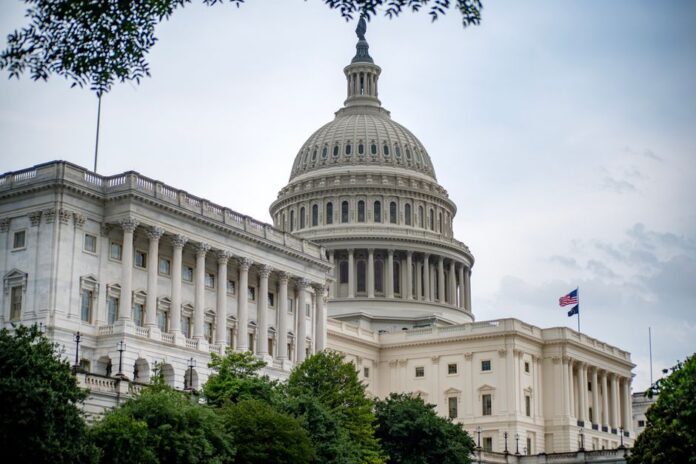
Photo: Ramaz Bluashvili / Pexels
By The News Beacon Newsroom, National Desk — Published October 29, 2026
Table of Contents
- Key Takeaways
- The Background & Context
- Why This Matters
- Reactions & Analysis
- What Happens Next
- Frequently Asked Questions
A wave of judicial rulings has swept across the nation, with courts at multiple levels rejecting the Trump administration’s efforts to reshape how elections are conducted in the United States. According to the Brennan Center for Justice, 34 separate courts have now weighed in on federal attempts to assert greater control over state and local election systems—a fundamental shift in how America has governed voting for more than two centuries.
What courts said about Trump administration initiatives has become a defining question in national news, as judges from district benches to appellate panels have consistently blocked or criticized federal overreach into election administration. The pattern reveals a remarkable consensus across the judiciary that certain boundaries between federal government authority and state sovereignty must hold, even as political pressures mount ahead of the 2026 midterm elections.
The legal battles center on new rules and directives issued by federal agencies that critics say would centralize election oversight in ways the Constitution never intended. Washington state officials celebrated what they called “a huge victory” when courts halted implementation of what they described as an “anti-democratic new rule,” declaring that “Washington’s elections are safe and secure” and vowing to “continue to stand up for Washington voters.”
Key Takeaways
- Thirty-four courts have issued rulings against Trump administration attempts to expand federal control over election systems, according to the Brennan Center for Justice.
- Washington state successfully blocked implementation of a federal rule that officials characterized as threatening election security and voter rights.
- The Center for American Progress has described the administration’s actions as interference in the 2026 midterm elections designed to entrench what they call an “imperial presidency.”
- The legal challenges represent a rare moment of judicial consensus spanning multiple jurisdictions and levels of the court system.
- State officials across the country have mounted vigorous legal defenses of their traditional authority to administer elections within their borders.
- The Supreme Court may ultimately need to resolve questions about the constitutional balance between federal oversight and state election authority.
The Background & Context
American elections have always operated as a hybrid system. States and localities handle the nuts and bolts—registering voters, printing ballots, staffing polling places, counting votes. The federal government sets certain baseline standards, particularly for federal races. This division of labor has survived civil war, world wars, and dramatic expansions of voting rights.
The current controversy erupted when the Trump administration began issuing directives that states and election officials say cross traditional boundaries. While the specific content of these rules remains subject to ongoing litigation, the pattern is clear: federal agencies have sought new powers to supervise, review, or potentially override decisions that have historically belonged to states.
The Brennan Center’s tally of 34 court rulings represents an extraordinary level of judicial engagement with executive branch election policy. Courts typically defer to agency expertise. That so many judges have ruled against the administration suggests the legal arguments supporting expanded federal control have failed to persuade across a wide spectrum of judicial philosophies and geographic regions.
Washington state’s successful legal challenge illustrates the dynamic playing out nationwide. State officials there framed their defense not merely as a jurisdictional dispute but as a matter of protecting voters from what they characterized as anti-democratic federal intrusion. The language used by Washington officials—celebrating victory, emphasizing security, pledging continued resistance—signals that states view this as an existential fight over who ultimately controls American democracy.
Why This Matters
Elections form the bedrock of American self-governance. Who administers them, under what rules, subject to whose oversight—these questions determine whether citizens trust the process and accept the results.
The Center for American Progress has framed the administration’s actions as interference aimed at the 2026 midterm elections, suggesting the timing is not coincidental. Midterms traditionally serve as a referendum on the party holding the White House. If federal agencies controlled more levers of election administration, critics argue, the potential for partisan manipulation would grow exponentially.
The phrase “imperial presidency” invoked by the Center carries historical weight. It recalls concerns about executive overreach that have surfaced repeatedly in American history, from Andrew Jackson’s defiance of the Supreme Court to Richard Nixon’s claims of absolute executive privilege. Applied to election administration, the term suggests an executive branch attempting to secure its own political future by controlling the machinery of democracy itself.
For ordinary voters, the stakes are concrete. Will polling places remain open? Will mail-in ballots be counted? Will state officials who know local conditions make decisions, or will distant federal bureaucrats impose uniform rules that may not fit diverse communities? These practical questions underlie the legal abstractions.
The consistent pattern of court rulings also matters for rule of law. Thirty-four judicial defeats suggest either poorly conceived legal theories or policies that genuinely exceed constitutional boundaries. Either way, the judiciary is performing its checking function, reminding the executive branch that even in the name of election security or uniformity, certain limits exist.
Reactions & Analysis
State officials have emerged as the primary line of defense against federal expansion. Washington’s response exemplifies the tone: defiant, protective of voters, and determined to continue fighting. The statement that “Washington’s elections are safe and secure” serves dual purposes—reassuring constituents while rebutting any federal claims that problems require intervention.
The Brennan Center’s documentation of 34 court rulings provides ammunition for those arguing the administration has pursued an unconstitutional strategy. Legal scholars and voting rights advocates have seized on this number as evidence of systematic overreach rather than isolated missteps.
The Center for American Progress has placed the controversy in broader political context, arguing the administration’s true goal is not improving elections but entrenching power. This interpretation transforms technical legal disputes into a narrative about democratic backsliding and authoritarian tendencies.
Defenders of expanded federal authority argue that states have sometimes failed to protect voting rights, pointing to historical examples of discrimination and modern concerns about election security. They contend that federal oversight serves as a necessary safeguard. However, this argument has not prevailed in the courts reviewing the specific rules at issue.
The judiciary itself has spoken through actions more than words. Thirty-four rulings against the administration represent judges appointed by presidents of both parties, sitting in red states and blue states, applying different interpretive methodologies. This breadth suggests the legal problems with the administration’s approach are fundamental rather than ideological.
What Happens Next
The legal battles will likely continue through the 2026 election cycle. Appeals are almost certain, and the Supreme Court may eventually need to establish clearer boundaries between federal and state election authority.
States emboldened by their court victories may become more assertive in resisting federal directives. The Washington pledge to “continue to stand up for Washington voters” suggests a long-term posture of vigilance and resistance. Other states may follow this model, treating each new federal initiative with suspicion and immediately seeking judicial review.
The administration faces a choice: accept the judicial consensus and retreat, or continue pressing despite mounting defeats. Continued losses in court could weaken the administration’s credibility on other issues. Alternatively, a single Supreme Court victory could override dozens of lower court defeats and reshape the landscape entirely.
Congress could theoretically clarify the law, either expanding or restricting federal election authority. However, given partisan divisions and the political sensitivity of election rules, legislative action seems unlikely without a crisis or dramatic shift in public opinion.
For 2026, the practical effect of these court rulings is to preserve the status quo. States will continue administering elections much as they have. Federal standards established by previous legislation remain in place. What won’t happen, at least for now, is a fundamental shift toward centralized federal control.
Frequently Asked Questions
Why have so many courts ruled against the Trump administration on election issues?
The pattern of 34 court rulings against the administration suggests judges across multiple jurisdictions have found the legal justifications for expanded federal control over elections to be constitutionally insufficient. Courts have traditionally recognized that states possess primary authority over election administration, and the administration’s attempts to alter this balance have not persuaded judges that federal intervention is legally warranted or properly authorized by existing statutes.
What specific rules has the Trump administration tried to implement?
While the sources describe these initiatives as “anti-democratic” rules that threaten state election security and voter rights, the specific content remains subject to ongoing litigation. What is clear is that these rules sought to expand federal oversight or control over aspects of election administration that states have traditionally managed independently, prompting legal challenges from state officials and voting rights organizations.
Could the Supreme Court reverse these lower court decisions?
Yes, the Supreme Court has the authority to review and potentially reverse lower court decisions. If the administration appeals and the Court agrees to hear the case, it could establish new precedents regarding the balance of federal and state power over elections. However, the breadth of lower court consensus against the administration suggests any reversal would require the Court to significantly reinterpret existing constitutional and statutory frameworks governing election administration.
How might these legal battles affect the 2026 midterm elections?
As the Center for American Progress has noted, the timing of these federal initiatives coincides with the 2026 midterm elections, raising concerns about potential interference. The court victories by states mean that elections will proceed under existing rules rather than new federal directives. This preservation of the status quo allows state and local officials to continue administering elections as they have, potentially reducing confusion and maintaining established procedures that voters and election workers understand.
The courthouse doors remain open, and the fundamental question persists: who governs American democracy? Thirty-four judges have offered their answer. Whether that consensus holds, or whether higher courts chart a different course, will shape not just the 2026 midterms but the structure of American self-governance for generations to come.


