
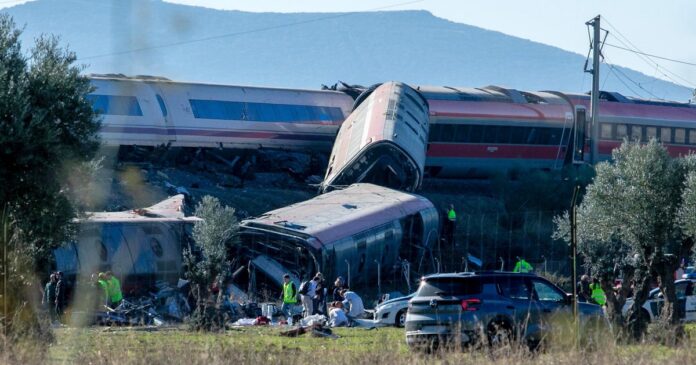
A catastrophic collision between two high-speed passenger trains in central Spain claimed at least 64 lives Wednesday morning when one train slammed into another that had stopped on the tracks, derailing two cars and injuring dozens more in one of the country’s deadliest rail disasters in recent years.
What Happened on the Tracks
The crash occurred in Toledo province when a high-speed train traveling from Madrid to Seville struck the rear of another train that had come to a stop on the same route. The impact knocked two passenger cars completely off the tracks. Both trains were operating on the same line heading in the same direction when the collision happened. Authorities suspended all rail service between Madrid, Ciudad Real, and Andalusia immediately following the accident.
Transportation Minister Padilla confirmed that 397 passengers were aboard the state-owned RENFE train while 147 passengers occupied the private IRYO company train. Earlier reports indicated approximately 80 people sustained injuries in the crash. Emergency responders rushed to the scene as local officials mobilized resources to handle the massive casualty situation. The mayor of nearby Urda directed civil protection authorities to prepare a sports pavilion to treat injured passengers.

Live updates: independent.co.uk/news/world/eur…

Questions About Safety Systems
Investigators have not determined what caused the moving train to strike the stationary one, raising immediate questions about safety protocols and collision-avoidance technology on Spain’s high-speed rail network. The accident involved the same two rail companies that were part of a deadly crash just nine months earlier in January. Regional President Emiliano Garcia-Page traveled directly to the crash site as authorities launched a full investigation into the circumstances surrounding the collision.
What This Means
This tragedy marks a significant setback for Spain’s celebrated high-speed rail system, which has long been considered one of Europe’s safest transportation networks. The involvement of both state-owned and private rail operators in multiple fatal accidents within a single year will likely prompt calls for enhanced safety regulations and more rigorous oversight of train operations. Families across Spain and international travelers who regularly use these routes now await answers about how two trains on the same track could collide with such devastating consequences.


