
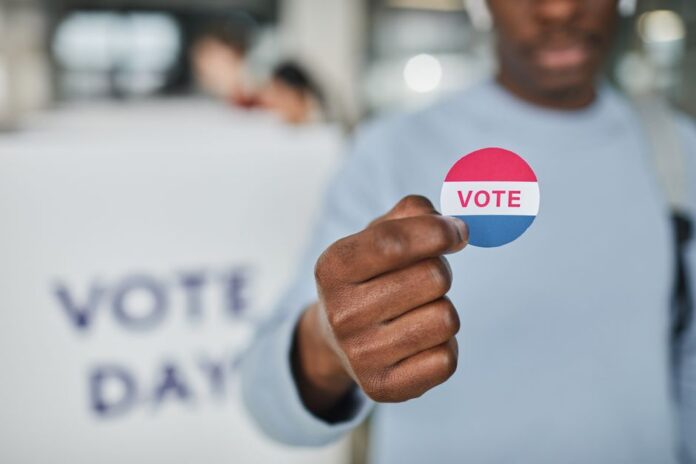
Photo: Edmond Dantès / Pexels
By The News Beacon Newsroom, Politics Desk — Published October 12, 2026
Table of Contents
- Key Takeaways
- The Background & Context
- Why This Matters
- Reactions & Analysis
- What Happens Next
- Frequently Asked Questions
Abdul El-Sayed, a rising progressive voice in American politics, is sounding an alarm that many Democrats may not want to hear but increasingly believe they must heed. The physician and former Detroit health director has declared that his party cannot simply aim to win elections in the coming cycles—they must win decisively, by overwhelming margins that leave no room for doubt or manipulation. His stark warning comes as Republicans continue to challenge electoral outcomes and spread unfounded claims about voting integrity, a pattern that has fundamentally reshaped how campaigns must think about victory itself.
The message from Abdul Sayed and other Democrats reflects a new reality in American politics: narrow wins may no longer be enough to ensure peaceful transfers of power. After years of election denial rhetoric following the 2020 presidential race, progressive leaders are confronting the possibility that close contests will inevitably trigger legal challenges, procedural obstruction in Congress, and efforts to overturn legitimate results. This calculus is forcing campaigns to rethink their strategies, resource allocation, and turnout goals.
El-Sayed’s comments also come as he addresses his own political evolution, including past criticism of former President Barack Obama that he now characterizes differently. Acknowledging that he “was younger” and “angry” when he made those earlier statements, El-Sayed’s reflections offer a window into how progressive activists are navigating internal party tensions while trying to build the broadest possible coalition against Republican challenges to democratic norms.
Key Takeaways
- Abdul El-Sayed has called on Democrats to win elections by “massive numbers” to prevent Republican attempts at election denial from gaining traction.
- The strategy reflects growing concern that close electoral margins will trigger challenges and attempts to overturn legitimate results, as seen in recent election cycles.
- El-Sayed has addressed his past criticism of President Obama, saying he was “younger” and “angry” at the time, signaling an evolution in his political approach.
- The comments highlight internal Democratic debates about how to build winning coalitions while maintaining progressive principles and confronting threats to electoral integrity.
- This electoral strategy has implications for campaign resource allocation, voter mobilization efforts, and how parties think about victory margins in Congress and state legislatures.
- The focus on overwhelming victories represents a fundamental shift in campaign thinking, where simply crossing the finish line first may no longer guarantee a peaceful transition of power.
The Background & Context
Abdul El-Sayed has emerged as a significant voice in progressive politics over the past several years. A physician by training, he served as executive director of the Detroit Health Department at age 30, becoming the youngest health official of a major American city. His 2018 gubernatorial campaign in Michigan, though unsuccessful, established him as a compelling advocate for universal healthcare, economic justice, and progressive policy solutions. Since then, he has remained active in political discourse through writing, podcasting, and advocacy work.
The context for El-Sayed’s current warnings cannot be separated from the events following the 2020 presidential election. Despite no evidence of widespread fraud and dozens of failed legal challenges, significant portions of the Republican Party continue to question the legitimacy of that contest. This rhetoric has translated into concrete legislative action in numerous states, where new voting restrictions have been enacted under the banner of “election integrity.” More troublingly for democratic institutions, it has created a template where losing candidates increasingly refuse to concede and instead pursue legal and political strategies to overturn results.
The 2022 midterm elections provided a test case for these dynamics. While many election deniers lost high-profile races for governor and secretary of state positions, the pattern of refusing to concede and immediately challenging results became normalized in ways that would have been unthinkable a decade ago. Several congressional races saw extended disputes, and even some candidates who eventually acknowledged defeat did so only after exhausting every possible avenue of challenge. This new normal has forced Democratic strategists to confront an uncomfortable truth: winning may not be enough.
El-Sayed’s evolution on intra-party criticism also reflects broader tensions within the Democratic coalition. During the Obama years and beyond, progressive activists frequently criticized the party establishment for what they saw as insufficient commitment to transformative change. These critiques often focused on healthcare policy, economic inequality, climate action, and foreign policy. As the threat to democratic institutions themselves has grown more acute, however, some progressive voices have recalibrated their approach, seeking to balance policy ambitions with the imperative of defeating candidates who openly question electoral legitimacy.
Why This Matters
The implications of El-Sayed’s argument extend far beyond campaign strategy. At stake is the fundamental question of whether American elections can continue to function as peaceful, legitimate mechanisms for transferring power. When one party adopts a posture of challenging any result that doesn’t favor them, the entire system becomes vulnerable to breakdown. Close elections become not just nail-biters but potential constitutional crises.
For ordinary voters, this creates a new kind of civic responsibility. Turnout has always mattered, but now the margin of victory carries extra weight. A candidate who wins by 20,000 votes might face a very different post-election landscape than one who wins by 200,000, even though both victories are equally legitimate under the law. This reality places additional pressure on citizens to participate, to persuade their neighbors, and to ensure that outcomes are decisive enough to withstand bad-faith challenges.
The economic costs of prolonged election disputes are also significant. Businesses and investors value political stability. When election results remain contested for weeks or months, uncertainty ripples through markets and planning processes. State and local governments may face leadership vacuums that delay critical decisions on budgets, legislation, and policy implementation. The longer it takes to settle who won, the less time elected officials have to actually govern.
There are also profound implications for how campaigns allocate resources. If the goal shifts from “win by one vote” to “win by overwhelming numbers,” then strategies must change. Safe districts may require continued investment to run up the score. Voter registration and turnout operations become even more critical. The traditional calculus of focusing solely on swing voters in competitive areas gives way to a broader mandate to maximize turnout everywhere. This could actually benefit democracy by encouraging campaigns to engage with more voters, but it also raises questions about resource constraints and whether parties can sustain such intensive mobilization efforts cycle after cycle.
Reactions & Analysis
El-Sayed’s comments have resonated with Democrats who lived through the anxiety of watching election results challenged despite clear outcomes. Many party activists and officials share his concern that procedural challenges and denial rhetoric will only intensify, particularly as the 2024 presidential race approaches. The strategy of winning big rather than just winning has gained currency in campaign circles, even as some question whether it’s realistic given the closely divided nature of the American electorate.
Political analysts note that the “massive numbers” strategy faces significant practical obstacles. The United States is currently experiencing one of the most polarized periods in modern history, with relatively few persuadable voters and highly sorted partisan geography. Building overwhelming majorities in such an environment requires not just persuasion but extraordinary turnout operations and potentially expanding the electorate through registration of previously disengaged citizens. These are achievable goals, but they demand resources, organization, and sustained effort that can be difficult to maintain.
El-Sayed’s acknowledgment of his past Obama criticism has also drawn attention as a case study in political maturation. His willingness to characterize his younger self as “angry” and to implicitly suggest his views have evolved demonstrates a kind of self-reflection that is relatively rare in public political discourse. It may also signal a broader recognition among progressives that internal party battles, while important for policy direction, must be balanced against external threats to democratic functioning. Building the coalitions necessary to win by massive numbers requires accommodating diverse viewpoints within the party, even when disagreements remain.
Some observers worry that the focus on overwhelming victories could become a self-fulfilling prophecy of despair. If Democrats believe that narrow wins will inevitably be challenged and potentially overturned, does that create a sense of futility that depresses turnout? Campaign messaging must walk a fine line between urgency and defeatism, motivating voters without suggesting that anything less than a landslide is doomed to failure.
What Happens Next
The test of El-Sayed’s thesis will come in the 2024 elections and beyond. If Democratic campaigns genuinely adopt a strategy focused on maximizing victory margins rather than simply securing wins, we should see changes in resource allocation, messaging, and ground game operations. Expect more investment in voter registration, particularly in communities with historically lower turnout. Campaigns may also focus more on early voting and mail-in ballots, not just to secure votes but to build psychological momentum that makes the eventual outcome feel inevitable.
Legislation will continue to play a role as well. Federal voting rights bills remain stalled in Congress, but state-level battles over election administration, vote counting procedures, and certification processes will intensify. The outcome of these fights will determine whether winning by massive numbers is even sufficient—if the rules themselves are designed to allow post-election manipulation, even landslides might be vulnerable.
The Republican Party’s own evolution will be critical. If election denial rhetoric continues to dominate, Democrats will have no choice but to pursue the overwhelming victory strategy. If, however, a critical mass of Republican leaders begins to accept electoral outcomes and discourage baseless challenges, the pressure to win by massive margins may ease. Unfortunately, current trends suggest the former scenario is more likely than the latter.
For El-Sayed personally, his comments position him as a voice for both progressive policy ambitions and democratic defense. As he continues to navigate his own political future, whether through another campaign or continued advocacy work, his ability to speak to both the party’s activist base and its broader coalition will be tested. His evolution on Obama criticism suggests he understands the need for that balance, but maintaining it amid intense political pressure is never easy.
Frequently Asked Questions
Who is Abdul El-Sayed and why does his opinion on election strategy matter?
Abdul El-Sayed is a physician, progressive political figure, and former Detroit health director who ran for governor of Michigan in 2018. His voice carries weight in progressive Democratic circles due to his policy expertise, communication skills, and ability to articulate the concerns of younger, more left-leaning party activists. His comments on election strategy reflect broader anxieties within the Democratic coalition about how to protect electoral integrity in an environment where results are increasingly challenged regardless of their legitimacy.
What does “winning by massive numbers” actually mean in practical terms?
In practical terms, winning by massive numbers means building victory margins large enough that they cannot be plausibly challenged through legal procedures, recounts, or political pressure. Rather than aiming for 50.1 percent of the vote, campaigns would target 55, 60, or even 65 percent where possible. This requires extraordinary voter turnout, effective persuasion of swing voters, and expanded registration efforts to bring new voters into the electorate. The goal is to make outcomes so decisive that attempts at denial appear absurd even to skeptical observers.
How has Abdul El-Sayed’s view of President Obama changed over time?
According to reports, El-Sayed has addressed past criticism of President Obama by acknowledging he was “younger” and “angry” when he made those earlier statements. While the specific nature of his previous criticism and current views are not fully detailed, his comments suggest a political evolution common among activists who initially criticized Obama from the left but have since gained broader perspective on political constraints and coalition-building. This evolution reflects ongoing debates within the Democratic Party about how to balance progressive policy goals with practical electoral realities.
Could the strategy of winning by massive margins actually work given how polarized America is?
The feasibility of this strategy faces significant challenges given current political polarization. The American electorate is closely divided, with relatively few swing voters and highly partisan geographic sorting. However, there is potential in focusing on turnout rather than persuasion—mobilizing voters who support Democratic positions but don’t always participate. Success would require sustained investment in voter registration, community organizing, and turnout infrastructure. While difficult, high-turnout elections in recent cycles suggest it’s not impossible, though maintaining such efforts over multiple election cycles presents resource and organizational challenges.
As America moves toward another presidential election cycle, the stakes have never been clearer. The question is no longer just which party will win, but whether victories will be accepted and democratic transitions preserved. El-Sayed’s call for overwhelming margins is both a strategic recommendation and a warning about the fragility of institutions many Americans have long taken for granted. Whether his party can execute such a strategy—and whether it will prove sufficient—remains one of the defining questions of this political era.


