
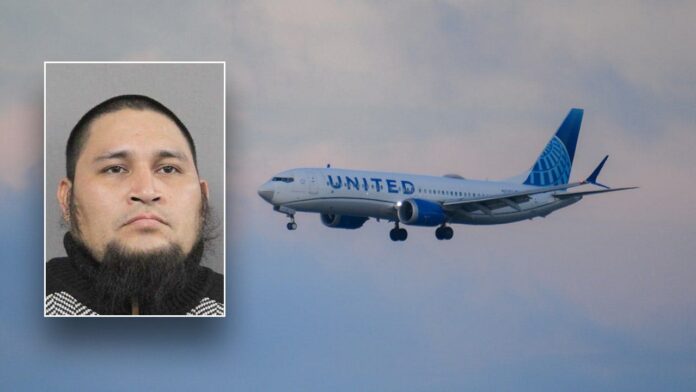
A Honduran national deported from the United States three separate times now faces terrorism charges after allegedly threatening to bomb a United Airlines flight and attempting to force his way into the cockpit, federal authorities confirmed Tuesday.
Terror In The Skies Over Louisiana
Rony Alexander Gomez-Alberto was taken into custody Monday night after United Airlines Flight 2174 made an emergency landing at Louis Armstrong New Orleans International Airport. The Boeing 737 MAX 9, carrying 46 passengers and six crew members, had departed from Newark when Gomez-Alberto allegedly claimed to have a bomb during the flight. Pilots issued a hijacking alert as the suspect attempted to breach the cockpit door, forcing an emergency response upon landing.
Jefferson Parish Sheriff’s Office arrested Gomez-Alberto on charges including communicating false information of planned arson, terrorizing, bomb threats, and disorderly conduct. Immigration and Customs Enforcement lodged a detainer the following day, revealing a disturbing pattern of illegal entries and failures in the immigration system that allowed this incident to occur.

DHS says suspect is twice-deported illegal immigrant from Honduras

A Decade Of Illegal Entries And Deportations
Department of Homeland Security records expose a troubling timeline spanning 15 years. Border Patrol first apprehended Gomez-Alberto near El Indio, Texas in September 2011 after illegally crossing from Mexico. He was removed from the country. Just three years later, in October 2014, agents caught him again near Columbus, New Mexico, and deported him a second time. Undeterred, he attempted another illegal entry near San Ysidro, California in 2019, leading to his third arrest by Border Patrol.
Despite this extensive criminal immigration history, an immigration judge ordered Gomez-Alberto released from ICE custody in January 2020 pending removal proceedings. He remained in the United States for the next six years before Monday’s alleged mid-air terror incident, raising serious questions about judicial discretion in immigration cases and the effectiveness of current enforcement policies.
What This Means For Flight Safety
The incident underscores growing concerns about aviation security and immigration enforcement failures. DHS emphasized its hardline stance under the current administration, stating that criminal illegal aliens are not welcome in the United States. Yet this case demonstrates how repeated deportations and judicial release orders can leave dangerous individuals free to operate within American borders. The 52 people aboard Flight 2174 faced a potentially catastrophic situation that federal immigration authorities had three previous opportunities to prevent permanently. United Airlines confirmed all passengers and crew landed safely, but the psychological impact and security implications continue reverberating through discussions about border enforcement and public safety protocols.


