
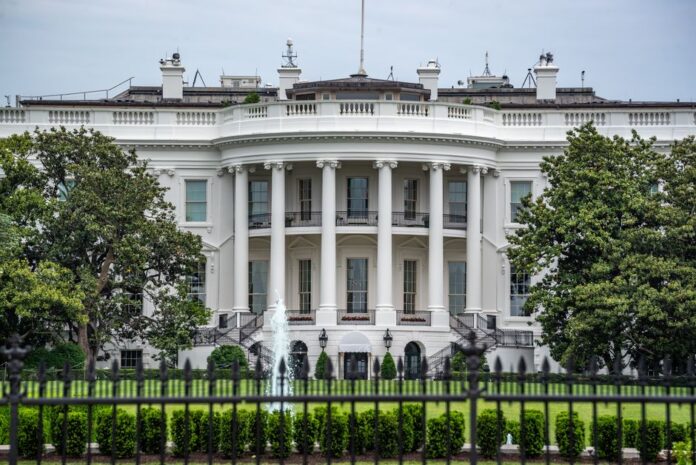
Photo: Dominik Gryzbon / Pexels
By The News Beacon Newsroom, Politics Desk — Published September 3, 2026
Table of Contents
- Key Takeaways
- The Background & Context
- Why This Matters
- Reactions & Analysis
- What Happens Next
- Frequently Asked Questions
The White House is urging American aerospace and technology companies to skip an upcoming international space summit organized by French President Emmanuel Macron, according to reports. The move represents a sharp escalation in transatlantic tensions over space policy and industrial competition, coming at a time when geopolitical rivalries are reshaping global technology partnerships. This campaign by the administration signals a broader shift in how Washington views international cooperation in strategic sectors, particularly as Congress debates new legislation aimed at protecting American technological leadership.
The pressure campaign targets what French officials have billed as a major multilateral gathering to discuss space governance and cooperation. But American officials apparently see the summit as a potential vehicle for European industrial policy that could disadvantage U.S. firms. The diplomatic friction comes amid a wider realignment of space politics, where national security concerns increasingly drive decisions once guided primarily by scientific collaboration.
For American voters and taxpayers, the dispute highlights how space—once a domain of peaceful exploration—has become another arena for political maneuvering. The decisions made today about international partnerships will shape not only which companies win lucrative contracts, but also who sets the rules for humanity’s expansion beyond Earth.
Key Takeaways
- The White House is actively discouraging U.S. companies from attending a space summit organized by French President Emmanuel Macron, marking a significant diplomatic rift with a key ally.
- The move reflects growing tensions over industrial policy and technological competition between the United States and European Union, particularly in strategic sectors like aerospace.
- China’s expanding presence in space and technology sectors is strengthening support for protective industrial policies on both sides of the Atlantic, creating competing visions of international cooperation.
- The dispute comes as Congress considers new legislation related to space commerce and national security, with implications for how American firms engage internationally.
- The controversy underscores how space policy has evolved from primarily scientific collaboration to a domain increasingly shaped by geopolitical competition and economic nationalism.
- American companies now face difficult choices between maintaining international partnerships and aligning with Washington’s strategic priorities in an election year where industrial policy has become a campaign flashpoint.
The Background & Context
Space cooperation has long been a cornerstone of Western alliance relationships. From the Apollo-Soyuz mission during the Cold War to the International Space Station partnership, collaborative ventures have transcended terrestrial political disputes. France, through its space agency CNES and its leadership role in the European Space Agency, has been a consistent American partner in these endeavors.
But the landscape has shifted dramatically in recent years. China’s rapid advancement in space capabilities—including a permanent space station, lunar missions, and ambitious Mars exploration plans—has reframed the sector as a strategic competition rather than purely scientific endeavor. Beijing’s willingness to offer space partnerships to countries excluded from Western programs has given it diplomatic leverage, particularly in the developing world.
The European Union has responded by developing more assertive industrial policies designed to protect and promote European technology companies. According to reports, the perceived China threat has bolstered support for these EU industrial policy initiatives. European officials argue they need tools to prevent strategic technologies from falling into the wrong hands while ensuring European companies can compete with heavily subsidized Chinese and American rivals.
President Macron has positioned France as a leader in European strategic autonomy—the concept that Europe should reduce dependence on the United States for defense, technology, and other critical capabilities. His space summit appears designed to advance this agenda by creating a forum where European, and potentially other international partners, can coordinate space policy independently of Washington’s preferences.
The timing is particularly sensitive. American politics has seen both major parties embrace more protectionist stances on industrial policy. Campaign rhetoric increasingly emphasizes bringing manufacturing home and limiting technology transfer to competitors. Legislation moving through Congress reflects these priorities, with bills targeting everything from semiconductor production to critical minerals supply chains.
Why This Matters
For American citizens, this diplomatic spat carries consequences that extend far beyond ceremonial summits. Space is big business. The sector supports hundreds of thousands of jobs across the United States, from engineers in California to factory workers in Alabama. Decisions about international partnerships directly affect which companies win contracts, where facilities get built, and which communities benefit from high-paying aerospace employment.
The dispute also touches on fundamental questions about America’s role in the world. Should the United States lead through multilateral cooperation, or does protecting national interests require going it alone? These questions resonate across policy domains, from climate change to trade to military alliances. The space sector serves as a microcosm of larger debates about globalization, sovereignty, and economic security.
Taxpayers have invested billions in NASA, military space programs, and research that has enabled the American commercial space industry to flourish. Companies like SpaceX, Blue Origin, and traditional aerospace giants have benefited from government contracts and technology development. When these firms participate in international forums, they carry not just their corporate interests but also American strategic priorities—or so Washington believes.
The White House campaign to discourage attendance at Macron’s summit suggests the administration views the gathering as potentially harmful to those interests. Perhaps officials worry that European partners will push regulatory frameworks that disadvantage American firms. Or they may fear that the summit will legitimize Chinese participation in ways that undermine Western technology security. Whatever the specific concerns, the pressure on companies reveals how thoroughly space has become intertwined with terrestrial geopolitics.
For voters heading into elections, space policy may seem abstract compared to kitchen-table economic issues. But the sector’s trajectory affects American competitiveness, job creation, and national security in tangible ways. How the United States balances cooperation with competition will shape the nation’s position in what many experts consider the next frontier of economic growth and strategic advantage.
Reactions & Analysis
The White House campaign has put American aerospace companies in an awkward position. Many maintain extensive partnerships with European firms and agencies. Airbus and Boeing collaborate on various projects. American satellite manufacturers depend on European launch services and ground stations. Scientific missions routinely involve international teams. Snubbing a summit hosted by the French president risks damaging relationships that have commercial and technical value.
Yet defying White House preferences carries its own risks. Government contracts represent a substantial portion of revenue for most major aerospace firms. Regulatory approvals, export licenses, and access to government-funded research all depend on maintaining good relationships with Washington. In an environment where industrial policy has become politically charged, companies cannot easily ignore signals from the administration.
European officials have reportedly expressed frustration with what they view as American heavy-handedness. The broader context includes ongoing tensions over industrial policy, with reports indicating that the China threat has bolstered support for EU industrial policy measures. European leaders argue they face the same challenges from Chinese state-backed competition that concern Washington, yet find themselves caught between American and Chinese pressure rather than treated as equal partners in developing responses.
Meanwhile, developments in other geopolitical arenas underscore the complex web of international relationships at play. Reports indicate that Indian Prime Minister Modi has implored Russian President Putin to end the Ukraine war, illustrating how even nations aligned with the West on many issues maintain independent diplomatic channels and priorities. This multipolar reality complicates American efforts to build coalitions around any single issue, including space governance.
Congressional reaction to the White House campaign has been muted publicly, but the episode feeds into ongoing legislative debates. Some members have pushed for stronger restrictions on technology sharing and international partnerships, particularly involving China. Others warn that excessive unilateralism will drive allies to develop independent capabilities that ultimately weaken American influence. The space summit dispute provides ammunition for both camps.
What Happens Next
Whether American companies ultimately attend Macron’s space summit remains to be seen. Some may send lower-level representatives as a compromise. Others might skip the event entirely while maintaining bilateral relationships with European partners through other channels. The outcome will send signals about the current balance of power between government pressure and corporate independence.
Regardless of attendance decisions, the episode has exposed fault lines in the Western alliance that will persist beyond any single gathering. As space becomes more commercially viable and strategically important, these tensions will likely intensify. European desires for strategic autonomy will continue clashing with American expectations of deference to Washington’s priorities. Companies will face increasingly difficult choices about which markets and partnerships to prioritize.
Legislative developments will shape the playing field. Congress is considering multiple bills related to space commerce, technology transfer, and industrial policy. How these measures balance openness with security will determine the practical constraints on corporate behavior. Election outcomes may shift the political calculus, though both parties have embraced more nationalist economic policies in recent years.
The international space governance landscape will evolve with or without American participation in forums like Macron’s summit. Other nations are developing capabilities and asserting interests. China’s space station operates independently of Western partnerships. Private companies are pursuing projects that transcend national boundaries. The question is whether the United States can shape these developments through engagement or will find itself reacting to frameworks developed by others.
For American workers and communities dependent on aerospace industry, the path forward remains uncertain. Will protectionist policies preserve jobs by limiting foreign competition, or will they cost opportunities as other nations develop independent capabilities? Will technology restrictions enhance security or simply create markets for competitors? These questions lack easy answers, but the decisions made today will reverberate for decades.
Frequently Asked Questions
Why is the White House discouraging companies from attending a space summit?
The administration apparently believes the French-organized summit could advance European industrial policies or governance frameworks that disadvantage American companies and strategic interests. By pressuring firms to skip the event, the White House aims to limit legitimacy and participation in discussions it views as potentially harmful to U.S. competitiveness and national security priorities in the space sector.
How does this dispute affect ordinary Americans?
The aerospace industry supports hundreds of thousands of American jobs and represents a sector where the United States maintains technological leadership. Decisions about international partnerships affect which companies win contracts, where facilities operate, and how taxpayer investments in space programs translate into economic benefits. The dispute also reflects broader questions about America’s approach to international cooperation that extend beyond space policy.
What role does China play in these tensions?
China’s rapid advancement in space capabilities has reframed the sector as strategic competition rather than purely scientific collaboration. This has driven both American and European officials to develop more protective industrial policies. However, the U.S. and EU sometimes disagree on how to respond, with Europeans seeking strategic autonomy from both China and the United States, while Washington expects allied coordination under American leadership.
Could this damage U.S. relationships with European allies?
The pressure campaign risks straining transatlantic relationships, particularly with France, a key space partner. European officials view such moves as heavy-handed, especially when they face similar challenges from Chinese competition. However, the depth of existing commercial, technical, and security partnerships provides resilience. The long-term impact depends on whether this represents an isolated incident or signals a broader shift in American approach to allied cooperation.
The White House campaign against Macron’s space summit may seem like diplomatic inside baseball. But it reveals fundamental tensions about how America engages with the world in an era of renewed great power competition. As space becomes more central to commerce, security, and national prestige, these disputes will only grow more consequential. The companies, workers, and communities caught in the middle deserve a clear-eyed debate about the tradeoffs involved—one that goes beyond political posturing to address the real stakes for American interests and values.


