
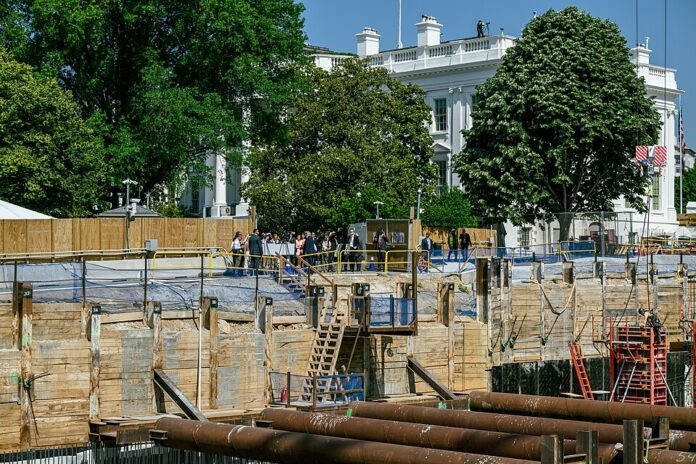
President Trump’s extensive White House renovation project could reach $927 million in total costs, with the majority of funding coming from taxpayer dollars and private donations, according to budget records analyzed by The Washington Post. Federal appeals court judges recently ordered construction to halt until Congress approves the project.
Following the Money
The Trump administration has directed $875 million to the Executive Residence account since January 2025, according to public budget records. The funding includes approximately $500 million transferred from the Secret Service and White House Military Office, $305 million from private philanthropists, and $70 million from an undisclosed source. The planned improvements encompass renovations to the White House grounds, Lafayette Square upgrades, and construction of a new helipad and visitor screening center.
The administration bypassed the traditional congressional appropriations process by channeling funds through the Executive Residence, a small office responsible for maintaining the president’s private quarters. While legal, experts described the dollar amounts involved as highly unusual. This office operates outside standard transparency requirements that apply to other federal agencies, keeping contract details confidential from public scrutiny.
Legal Roadblock
Two judges on the District of Columbia Court of Appeals ruled last week that above-ground construction must cease until the president secures congressional authorization. The judges emphasized that presidents serve as temporary residents, not owners, of the White House. They noted no precedent exists for a president using privately collected funds to demolish substantial portions of the building that Congress authorized and taxpayers financed.
White House spokesman Davis Ingle defended the renovations as long-overdue modernization ahead of America’s 250th independence anniversary celebration. He highlighted security enhancements including drone-proof structures and drone ports, citing a recent foiled attack during a White House event as evidence of their necessity.
Historical Context
Previous presidents who undertook major White House renovations followed different procedures. Franklin Roosevelt and Harry Truman secured congressional funding for their extensive repairs. Barack Obama similarly sought Capitol Hill approval for his White House improvements. The current approach represents a departure from this established precedent, raising questions about executive authority over federally owned property. The legal challenge now forces the administration to decide whether to seek formal congressional authorization or modify its renovation plans to comply with the court’s ruling.


GET RID OF DONALD TRUMP! HE’S AN EMBARASSMENT TO THE USA. DON’T ALLOW HIM TO CONTINUE TO ACT LIKE AN KING!
I agree with Trump here. Give the man a break. I think what is below the ballroom is important. But I also believe, as such a great nation, we should look our part.