
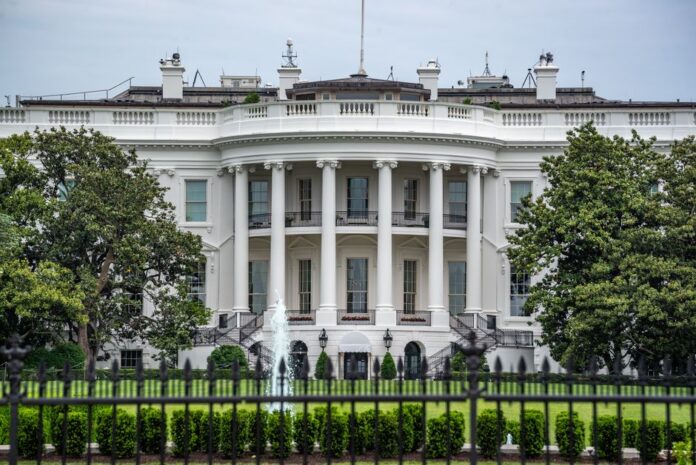
Photo: Dominik Gryzbon / Pexels
By The News Beacon Newsroom, Politics Desk — Published September 21, 2026
Table of Contents
- Key Takeaways
- The Background & Context
- Why This Matters
- Reactions & Analysis
- What Happens Next
- Frequently Asked Questions
A quiet standoff has erupted between major television networks and the White House, throwing a spotlight on one of Washington’s most essential but least understood institutions: the white house press pool. Recent reports indicate that major TV networks have declined to take on White House pool duties, with some standing in solidarity after one network was apparently sidelined. The dispute may seem like insider baseball, but it strikes at the heart of how Americans get information about their government.
The press pool system exists to ensure continuous coverage of the president. Not every reporter can fit into the Oval Office or travel on Air Force One. So a small rotating group—the pool—goes where the full press corps cannot, then shares notes, quotes, and observations with hundreds of other journalists. When that system breaks down, the public’s window into executive power grows cloudy.
What triggered this rare act of media solidarity? According to reports, major television networks declined White House pool duties after CNN, which had been assigned pool responsibilities, was apparently excluded or replaced. Other networks refused to step in, standing with their competitor in defense of the pooling arrangement that has governed White House coverage through Democratic and Republican administrations alike. The politics of access have always shaped campaign coverage, legislation announcements, and the daily rhythm of Congress reporting. But this dispute suggests something deeper: a test of whether traditional norms around presidential transparency will hold.
Key Takeaways
- The White House press pool is a rotating group of journalists who cover the president when space is limited, then share their reporting with the broader press corps.
- Major television networks recently declined to perform White House pool duties, according to multiple reports.
- The networks’ decision appears connected to CNN being excluded or replaced from its scheduled pool assignment, prompting competitors to stand in solidarity.
- The dispute highlights tensions over press access and the norms that have governed White House coverage across administrations of both parties.
- A breakdown in the pool system could limit public information about presidential activities, decisions, and statements.
- The standoff represents a rare moment of unity among news organizations that typically compete fiercely for scoops and ratings.
The Background & Context
The White House press pool traces its origins to the mid-twentieth century, when the expansion of the presidency and the growth of the news media created a logistical puzzle. Hundreds of credentialed journalists wanted access to the president, but physical space and security constraints made that impossible. The solution was elegant: a small group would represent the larger press corps, attending events where room was scarce—a bill signing in the Oval Office, a helicopter departure from the South Lawn, a bedside visit to a wounded soldier.
Pool duty rotates among major news organizations. On any given day, reporters from print, broadcast, and digital outlets take turns. They scribble notes, record audio, and shoot video. Within minutes, they file “pool reports” that go out to the entire White House press corps. These reports are raw, unedited dispatches—sometimes just a few sentences noting that the president boarded Marine One without answering shouted questions, sometimes longer narratives capturing historic moments.
The system runs on trust and reciprocity. Competitors share information because they know they’ll rely on rivals when it’s someone else’s turn in the pool. The White House Correspondents’ Association, a journalist-run organization, coordinates assignments and mediates disputes. Administrations have occasionally clashed with the press over access, but the pool system itself has remained largely sacrosanct. Presidents may not like the questions reporters shout, but they’ve generally accepted that the pool comes with the office.
That’s what makes the current standoff unusual. When major television networks declined pool duties and stood with CNN after it was apparently sidelined, they were defending an institutional arrangement that transcends partisan politics and news cycles. The decision by competing networks to support a rival speaks to concerns that go beyond any single organization’s access. It suggests worry that the pool system—and the transparency it enables—could be weakened or selectively enforced.
Why This Matters
For most Americans, the White House press pool is invisible infrastructure. They see the finished product—a news report about a presidential statement, footage of a bill signing, a quote from the president departing for Camp David—without knowing how it was gathered. But that infrastructure is critical to democratic accountability.
Consider what happens without a functioning pool. Presidential activities could go unwitnessed by independent observers. Official statements might reach the public only through government channels, without journalists present to ask follow-up questions or note body language and context. The president could travel, meet with advisors, or make decisions with no real-time accountability to the press and, by extension, the public.
This matters because the presidency has grown enormously powerful. Modern presidents command military forces, shape the economy through executive orders, influence legislation through veto threats and bully pulpit speeches, and dominate the news cycle. Congress provides a check, but lawmakers themselves rely heavily on press coverage to know what the executive branch is doing hour by hour. Voters deciding whom to support in elections need information about how their president spends time, whom he or she consults, and how decisions are made.
The pool system also protects against selective access. Without it, a White House could reward friendly outlets with exclusive access while freezing out critical voices. The pool ensures that even journalists a president dislikes get the same information as those he or she favors. It’s a small-d democratic principle: the press represents the public, not itself, and access shouldn’t depend on political loyalty.
When major networks refuse pool duties in solidarity with a competitor, they’re signaling that these principles are non-negotiable. The move carries risk—news organizations want access and fear retaliation—but it reflects a judgment that the long-term stakes outweigh short-term competitive advantage. If the pool system erodes, every news organization loses, and so does the public.
Reactions & Analysis
The networks’ decision to decline White House pool duties has reverberated through the media industry and political circles. While the specific details of what prompted CNN’s apparent exclusion remain unclear from available reports, the response from other major television networks has been unambiguous: they stood with their competitor rather than step into the breach.
This kind of solidarity is rare in an industry defined by competition. Networks battle for ratings, scoops, and prestige. They regularly criticize each other’s coverage and poach each other’s talent. Yet when the pool system itself appeared threatened, competitive instincts gave way to collective action. The message was clear: some norms are more important than any individual advantage.
Media analysts have noted that the dispute comes at a time of heightened tension between political leaders and the press. Campaign coverage has grown more adversarial, with candidates from both parties accusing journalists of bias. Legislation often passes with little scrutiny as reporters struggle to cover an increasingly complex government. Congress itself has become harder to cover, with fewer open hearings and more closed-door negotiations. Against that backdrop, the White House press pool represents one of the last guaranteed points of access to executive power.
For the White House, the standoff presents a dilemma. Excluding or sidelining a major news organization sends a message about access and accountability. But when other organizations refuse to cooperate, the administration faces a choice: back down and restore the status quo, or proceed without a functioning pool and accept the criticism and reduced coverage that would follow.
The public reaction has been more muted, in part because the dispute involves process rather than substance. Most Americans don’t follow the mechanics of White House coverage. But journalists and press freedom advocates have watched closely, understanding that today’s dispute over pool assignments could shape tomorrow’s access to information about legislation, elections, and executive decisions that affect millions of lives.
What Happens Next
The immediate question is whether the standoff will be resolved through negotiation or simply fade as a new news cycle takes over. The White House Correspondents’ Association, which coordinates pool assignments, will likely play a mediating role. Both the administration and the networks have incentives to find a solution: the White House wants its activities covered, and news organizations need access to do their jobs.
But the longer-term implications extend beyond this particular dispute. If the pool system can be disrupted—whether through exclusion of specific outlets or refusal of others to participate—it becomes a less reliable mechanism for ensuring transparency. Future administrations might test the boundaries further, especially if they calculate that a divided press corps won’t mount a unified response.
There’s also the question of how this dispute fits into broader debates about media, politics, and accountability. As traditional news organizations face financial pressure and competition from digital platforms, their ability to maintain expensive operations like White House coverage comes under strain. The pool system helps spread the cost and labor, but it only works if everyone participates in good faith.
Looking ahead, journalists and press freedom advocates may push for more formalized protections around pool access. Currently, the system operates largely on norms and mutual agreement. Making those arrangements more explicit—through rules enforced by the correspondents’ association or even legislation protecting press access—could prevent future disputes. But such changes would require political will and bipartisan support, both of which are scarce in the current environment.
For now, the standoff serves as a reminder that democratic accountability depends on institutions and norms that often go unnoticed until they’re threatened. The White House press pool may be invisible to most Americans, but its presence—or absence—shapes how much the public knows about the most powerful office in the land.
Frequently Asked Questions
What exactly does the White House press pool do?
The White House press pool is a small rotating group of journalists who cover presidential activities when space or logistics prevent the full press corps from attending. Pool reporters witness events like Oval Office meetings, travel on Air Force One, and observe the president at public and semi-public functions. They then file detailed reports that are shared with all credentialed White House journalists, ensuring broad coverage even when only a handful of reporters can be physically present. This system allows hundreds of news organizations to report on the president’s activities without all of them needing direct access to every event.
Why did major networks refuse White House pool duties?
According to reports, major television networks declined to take on White House pool responsibilities after CNN was apparently excluded or replaced from its scheduled pool assignment. The other networks stood in solidarity with CNN rather than step in to fill the gap. This rare show of unity among competitors suggests concern that the pool system—which has operated across administrations of both parties—was being disrupted in a way that could threaten press access and accountability. By refusing to participate, the networks signaled that protecting the integrity of the pool system was more important than individual competitive advantage.
Has anything like this happened before?
While tensions between the White House and the press are nothing new, a coordinated refusal by major networks to perform pool duties is unusual. Past administrations have clashed with individual reporters or organizations, sometimes revoking credentials or limiting access. But the pool system itself has generally remained intact because both sides recognize its value: the White House gets coverage of its activities, and the press gets guaranteed access. The current situation is notable precisely because it involves multiple competing news organizations acting in concert to defend an institutional arrangement, rather than a single outlet fighting for its own access.
What could happen if the press pool system breaks down?
Without a functioning press pool, large portions of presidential activity could go unwitnessed by independent journalists. The public would have to rely more heavily on official government accounts of what the president says and does, with fewer opportunities for reporters to ask questions, provide context, or note details that official statements might omit. This could reduce accountability and make it harder for voters, lawmakers, and the public to stay informed about executive branch decisions. A breakdown in the pool system could also lead to selective access, where some news organizations get preferential treatment based on their coverage, undermining the principle that the press represents the public rather than serving as a government megaphone.
The White House press pool will likely remain a point of tension as long as there’s friction between political power and journalistic scrutiny. But this latest dispute has clarified what’s at stake. When networks that usually compete instead stand together, they’re defending more than their own access. They’re protecting a system that, for all its imperfections, helps ensure that the American people can see and hear their president—not just when it’s convenient for those in power, but every day.


