
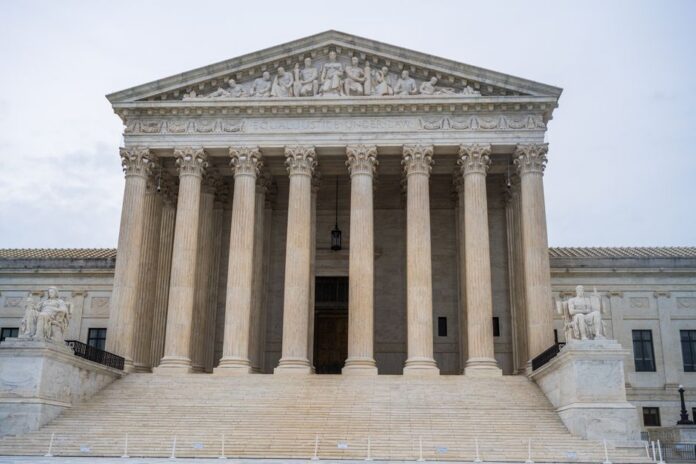
Photo: Guohua Song / Pexels
By The News Beacon Newsroom, National Desk — Published November 2, 2026
Table of Contents
- Key Takeaways
- The Background & Context
- Why This Matters
- Reactions & Analysis
- What Happens Next
- Frequently Asked Questions
The nation’s highest court has issued a split decision that both empowers and constrains the Trump administration’s efforts to reshape mail-in voting rules. In a ruling that appears contradictory at first glance, the Supreme Court sides with the administration on the legality of new restrictions while simultaneously blocking their implementation for the upcoming midterm elections. The decision leaves voters, election officials, and legal experts parsing through what amounts to a temporary victory for voting-access advocates but a long-term win for federal authority over election procedures.
The case centers on executive orders that would impose new limitations on mail-in ballot distribution and acceptance. While the justices acknowledged the administration’s authority to implement such changes, they determined that doing so immediately before a major election would create chaos and disenfranchise voters who have already begun the voting process under existing rules.
This nuanced ruling reflects the Court’s attempt to balance federal executive power with the practical realities of election administration. It also highlights the ongoing national debate over voting access, election security, and the proper role of federal versus state control over electoral processes.
Key Takeaways
- The Supreme Court ruled that the Trump administration has legal authority to impose new mail-voting restrictions, validating the executive branch’s power over certain election procedures.
- Despite this legal victory, the Court blocked implementation of these restrictions for the current midterm election cycle, citing timing concerns and potential voter confusion.
- The decision creates a framework where the restrictions could take effect for future elections, pending further legal challenges or legislative action.
- Election officials and voters face uncertainty about whether current mail-voting procedures will remain in place beyond this election cycle.
- The ruling represents a compromise that satisfies neither voting-rights advocates who sought permanent rejection of the restrictions nor administration officials who wanted immediate implementation.
- State election systems that have already distributed mail-in ballots or published voting instructions can proceed without sudden rule changes disrupting the process.
The Background & Context
Mail-in voting has become a flashpoint in American politics over the past several years. What was once a relatively uncontroversial accommodation for military personnel, elderly voters, and those unable to reach polling places on Election Day has evolved into a partisan battleground. The expansion of mail voting during the pandemic brought the practice into mainstream use, with tens of millions of Americans casting ballots by mail in recent election cycles.
The Trump administration has consistently raised concerns about mail-voting security. These concerns prompted executive action to tighten restrictions on who can receive mail-in ballots, how they must be requested, and under what circumstances they can be counted. Supporters of these measures argue they prevent fraud and ensure only eligible voters participate. Critics counter that the restrictions disproportionately affect elderly voters, people with disabilities, rural residents, and those without flexible work schedules who rely on mail voting to exercise their franchise.
The legal challenge reached the Supreme Court through an emergency appeal. Lower courts had temporarily blocked the restrictions, finding that implementing them so close to an election would violate principles of electoral fairness and create administrative nightmares for state and local officials. The administration argued that national security and election integrity concerns justified immediate action.
The Supreme Court’s decision reflects the complex intersection of federalism, executive authority, and voting rights. While states traditionally control election administration, federal law and constitutional principles set boundaries. The Court had to weigh the administration’s legitimate interest in regulating federal elections against the practical reality that millions of voters had already received ballots or made voting plans under existing rules.
Why This Matters
This ruling carries profound implications for American democracy and the balance of power between federal and state governments. For ordinary citizens, the immediate impact is reassurance that voting rules won’t change mid-stream in the current election. Voters who requested mail-in ballots can use them without fear that their votes will be invalidated by last-minute rule changes.
The longer-term stakes are higher. By affirming the administration’s authority to impose these restrictions eventually, the Court has opened the door to significant changes in how Americans vote. Mail voting has become essential for millions of citizens who cannot easily reach polling places, who work multiple jobs, who care for family members, or who live in remote areas. Restrictions on this voting method could reduce turnout and make voting more difficult for vulnerable populations.
Election administrators face planning challenges. They must prepare current elections under existing rules while simultaneously anticipating potential changes for future contests. This uncertainty complicates budgeting, training, and public education efforts. Counties and municipalities that have invested in mail-voting infrastructure may need to pivot if restrictions take effect.
The decision also affects public confidence in elections. When voting rules change frequently or become subjects of partisan conflict, citizens may lose faith in the system’s fairness. Clear, stable, and accessible voting procedures help maintain the legitimacy that democratic institutions require.
From a constitutional perspective, the ruling tests the boundaries of executive power. Can a president unilaterally reshape voting procedures through executive orders, or do such fundamental changes require congressional action? The Court’s answer—yes, but with limits—leaves room for continued legal and political battles.
Reactions & Analysis
The decision has generated mixed reactions across the political spectrum. Voting-rights organizations expressed relief that the midterm elections can proceed under existing rules, preventing what they characterized as voter suppression. These groups view the ruling as a temporary reprieve but remain concerned about future implementation of the restrictions.
State election officials, regardless of political affiliation, largely welcomed the delay. Changing voting procedures weeks before an election creates logistical nightmares. Ballots have been printed, instructions published, and poll workers trained. Sudden rule changes would have required expensive emergency adjustments and risked voter confusion that could depress turnout.
Legal experts noted the Court’s careful balancing act. By ruling on the merits in favor of the administration while blocking immediate implementation, the justices avoided accusations of either rubber-stamping executive overreach or politically motivated interference. This approach allows lower courts to develop more complete factual records about the restrictions’ impacts before they take effect.
Political analysts see the decision as reflecting broader tensions over voting access. Democrats generally favor expansive voting options, viewing accessibility as fundamental to democracy. Republicans often prioritize security measures, arguing that preventing fraud protects electoral integrity. This philosophical divide ensures that voting procedures will remain contested terrain regardless of which party controls government.
Some constitutional scholars worry about the precedent of allowing executive orders to reshape voting rules, even with delayed implementation. They argue that such fundamental decisions should flow from congressional legislation, which requires broader consensus and more deliberative processes than executive action.
What Happens Next
The immediate future is clear: the midterm elections proceed under current mail-voting rules. Voters can request and submit mail-in ballots according to their state’s existing procedures without worrying about federal restrictions invalidating their votes.
Beyond this election cycle, uncertainty prevails. The administration could move forward with implementing the restrictions for future elections. However, additional legal challenges are likely. Lower courts will examine whether the restrictions violate constitutional protections for voting rights, exceed executive authority, or conflict with state sovereignty over election administration.
Congress could intervene by passing legislation that either codifies expanded mail-voting access or establishes federal standards for restrictions. Such legislation would settle the legal uncertainty but faces political obstacles in a divided government. Neither party currently has the votes to impose its preferred voting regime over the other’s objections.
State governments may respond by adjusting their own voting laws. Some states might proactively adopt restrictions similar to the federal rules, while others could expand protections for mail voting to counteract potential federal limitations. This patchwork approach could create significant variation in voting access across the country.
Election administrators must plan for multiple scenarios. They need contingency plans for implementing restrictions if courts ultimately allow them while maintaining current systems in the meantime. This dual-track planning strains limited budgets and personnel.
Public attention to voting procedures will likely intensify. As citizens become more aware of how voting rules affect their ability to participate, grassroots advocacy on both sides of the debate will probably increase. This heightened engagement could ultimately benefit democracy if it leads to informed public discourse about balancing access and security.
Frequently Asked Questions
Can I still vote by mail in the upcoming midterm elections?
Yes. The Supreme Court’s decision specifically blocks implementation of the new restrictions for the current midterm election cycle. Voters can request and submit mail-in ballots according to their state’s existing rules without any changes imposed by the federal restrictions. Check with your local election office for specific deadlines and procedures in your jurisdiction.
Will these mail-voting restrictions eventually take effect?
Possibly, but not certainly. While the Supreme Court ruled that the administration has authority to impose these restrictions, they blocked immediate implementation. The restrictions could take effect for future elections, but additional legal challenges and potential congressional action make the long-term outcome uncertain. Lower courts will continue examining whether the restrictions are constitutional and appropriate.
Why did the Supreme Court rule both for and against the restrictions?
The Court separated two questions: whether the administration has legal authority to impose restrictions (ruling yes) and whether implementing them immediately before an election is appropriate (ruling no). This approach acknowledges executive power while recognizing that sudden rule changes close to an election create chaos and potentially disenfranchise voters who made plans under existing procedures.
How might this decision affect future elections?
The decision creates uncertainty for future election cycles. States and local jurisdictions must prepare for the possibility that mail-voting restrictions could take effect, while also maintaining current systems. Voters may face different rules in future elections depending on how legal challenges proceed and whether Congress acts. The decision ensures that voting procedures will remain a subject of legal and political debate for the foreseeable future.
As Americans head to the polls this fall, they can do so knowing the voting rules won’t change beneath their feet. But the broader battle over how we vote—and who gets to decide—is far from over. This Supreme Court decision is less an ending than an intermission in a drama that will shape democratic participation for years to come.


