
Facial Recognition Technology: How It Works and Risks
By Newsroom, Technology Desk — Published August 16, 2026
Table of Contents
- How Facial Recognition Technology Actually Works
- The Accuracy Problem and Algorithmic Bias
- Surveillance, Privacy, and the Erosion of Anonymity
- Use Cases: From Convenience to Control
- Building Guardrails: Regulation and Oversight
- Frequently Asked Questions
Walk through an airport, unlock your smartphone, or pass a traffic camera, and there’s a growing chance facial recognition technology is silently identifying you. This branch of digital innovation has moved from science fiction to daily infrastructure in barely a decade, powered by advances in artificial intelligence and machine learning that can now match a face in a crowd to a database entry in milliseconds. Yet as tech companies race to refine these systems and governments deploy them for everything from border security to policing, a fierce debate has erupted over accuracy, bias, privacy, and the proper limits of surveillance in a free society.
Understanding how this technology actually works—and what can go wrong—matters for anyone who cares about civil liberties, data privacy, and the rules we set for the tech industry as it reshapes public space.
How Facial Recognition Technology Actually Works
At its simplest, facial recognition is software that maps the geometry of a human face, converts that map into a numerical signature, and compares it against a database. But the devil, as always, lives in the details.
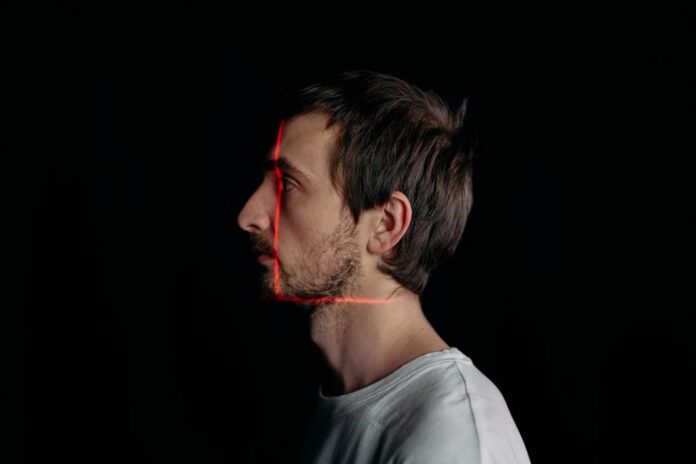
Modern systems rely on deep learning algorithms trained on millions of images. When a camera captures your face, the software first detects that a face is present—distinguishing it from background clutter. Then it identifies key landmarks: the distance between your eyes, the shape of your cheekbones, the contour of your jawline, the width of your nose. These measurements get translated into a mathematical template, sometimes called a faceprint, unique enough to distinguish you from nearly everyone else on the planet.
The template is then compared against a database. In a one-to-one match—unlocking your phone, for instance—the system checks whether your face matches the one enrolled template on file. One-to-many searches are far more complex: law enforcement might feed a suspect’s photo into a database of millions of driver’s license images, hunting for possible matches ranked by confidence score.
Speed and scale have transformed the equation. Cloud computing and infrastructure improvements mean agencies can now search vast troves of images in real time. What once required human analysts and hours of work now happens faster than you can blink. That efficiency is precisely what makes the technology so attractive to tech companies and government agencies alike—and so alarming to privacy advocates.
The Accuracy Problem and Algorithmic Bias
No facial recognition system is perfectly accurate, and the error rates are not evenly distributed. Study after study has documented that many algorithms perform significantly worse on women, people of color, and especially women of color compared to white men. The roots of this bias lie in training data: if a machine learning model is fed predominantly light-skinned faces during development, it learns those features best.
False positives—the system wrongly identifies someone as a match—can lead to mistaken arrests, invasive questioning, and the erosion of trust in institutions. False negatives mean criminals or security threats slip through undetected. Both failures carry real consequences, but the burden of false positives falls disproportionately on communities already over-policed and marginalized.
Some tech companies have made strides in reducing bias by diversifying their training datasets and refining algorithms. Independent testing has shown measurable improvement. But transparency remains a problem: many systems deployed by governments are proprietary black boxes, their error rates and testing protocols shielded from public scrutiny. Cybersecurity and data privacy experts warn that without rigorous, independent audits and clear standards, bias will persist and public accountability will remain elusive.
Surveillance, Privacy, and the Erosion of Anonymity
Facial recognition fundamentally changes the nature of public space. Traditionally, moving through a city offered a measure of anonymity. You could attend a protest, visit a clinic, enter a house of worship, or simply walk down the street without creating a permanent, searchable record of your movements.
That assumption no longer holds in places where cameras equipped with facial recognition scan crowds continuously. The technology allows retrospective tracking: authorities can identify everyone who was present at a particular location and time, then trace their movements across a network of cameras. This capability extends far beyond solving crimes—it enables mass surveillance on a scale previously impossible.
Privacy advocates argue this shifts the balance of power too far toward the state and large corporations. When every face is a unique identifier that can be logged, stored, and cross-referenced with other databases—social media profiles, purchasing histories, location data—anonymity disappears. The chilling effect on free expression and assembly is real: people may avoid lawful protests or sensitive locations if they know their presence will be recorded and catalogued indefinitely.
The tech regulation landscape is struggling to catch up. A patchwork of local and state rules has emerged, with some jurisdictions banning government use of facial recognition outright and others imposing transparency and oversight requirements. But comprehensive federal standards remain absent, leaving critical questions unresolved.
Use Cases: From Convenience to Control
The same technology can unlock your phone or help authoritarian regimes track dissidents. Context determines whether facial recognition serves as a helpful tool or an instrument of oppression.
Legitimate and relatively uncontroversial uses include:
- Unlocking personal devices and securing accounts, where the user consents and controls their own biometric data
- Expediting airport security and border crossings for enrolled travelers who voluntarily provide their faceprint
- Finding missing children or identifying victims of trafficking, where speed can save lives
- Assisting investigations after serious crimes by narrowing suspect pools, provided robust safeguards prevent misuse
But deployment in public spaces without individual consent raises harder questions. Should police scan crowds at a political rally? Should retailers track customers’ faces to build marketing profiles? Should landlords use facial recognition to monitor who enters apartment buildings? Each scenario involves trade-offs between security, efficiency, profit, and privacy that communities must weigh deliberately.
Digital transformation and enterprise tech have made adoption cheap and easy, but affordability does not equal wisdom. The tech industry’s mantra of “move fast and break things” works poorly when what breaks is civil liberty.
Building Guardrails: Regulation and Oversight
Calls for stronger tech regulation around facial recognition have grown louder, spanning the political spectrum. Civil liberties organizations want outright bans on government use in public spaces. Law enforcement agencies argue the technology is indispensable for solving violent crimes and preventing terrorism. Business groups seek clear rules that allow innovation while protecting consumers.
Effective oversight might include requiring warrants before police use facial recognition in investigations, mandating independent audits of algorithm accuracy and bias, prohibiting real-time surveillance of protests or other First Amendment activities, limiting how long faceprints and search records can be stored, and giving individuals the right to know when they have been scanned and matched.
Transparency is foundational. When agencies deploy these systems in secret, democratic accountability becomes impossible. Procurement contracts, accuracy statistics, and use policies should be public by default. Independent review boards with subpoena power and technical expertise can provide checks that internal oversight alone cannot.
The emerging technologies and innovation pipeline will only make facial recognition more powerful. Combining it with other data streams—social media activity, license plate readers, purchase records—enables surveillance far beyond what any single tool permits. Setting boundaries now, before these systems become too entrenched to challenge, is the task before lawmakers and citizens alike.
Frequently Asked Questions
Can facial recognition technology work if I’m wearing a mask or sunglasses?
It depends on the system and how much of your face is visible. Early algorithms struggled with partial occlusion, but newer software development has improved performance even when masks cover the lower face, analyzing periocular features like eye shape and spacing. Sunglasses still degrade accuracy significantly. Some systems now incorporate gait analysis or other biometrics to compensate, though this raises additional privacy concerns.
Is my faceprint stored when I unlock my phone with facial recognition?
On most consumer electronics and gadgets, the faceprint is stored locally on the device in encrypted form, not uploaded to company servers. This design limits exposure if the manufacturer’s cloud infrastructure is breached. However, always review privacy settings and terms of service, as practices vary. Third-party apps requesting facial data may handle it differently than the device’s native system.
Can I opt out of facial recognition in public spaces?
In most places, no formal opt-out exists for cameras operated by government or private entities in public areas. Some jurisdictions require posted notices when facial recognition is in use, but notification does not equal consent. Avoiding the technology entirely in cities with widespread deployment is nearly impossible. This asymmetry is precisely why privacy advocates push for stronger tech regulation and clearer legal protections.
How accurate are facial recognition systems used by law enforcement?
Accuracy varies widely depending on the vendor, the quality of the input image, and the demographic characteristics of the subject. Leading systems tested under controlled conditions can achieve very low error rates, but real-world performance in poor lighting, with low-resolution images, or on faces not well-represented in training data is often much worse. Independent audits and public reporting of error rates remain rare, making it difficult to assess the reliability of systems actually deployed on the street.
Facial recognition technology is neither inherently good nor bad—it is a tool whose impact depends entirely on how we choose to govern it. The technical capabilities will only grow sharper. The question is whether our legal frameworks, ethical standards, and democratic institutions can mature just as quickly, ensuring that innovation serves human dignity rather than eroding it.


