
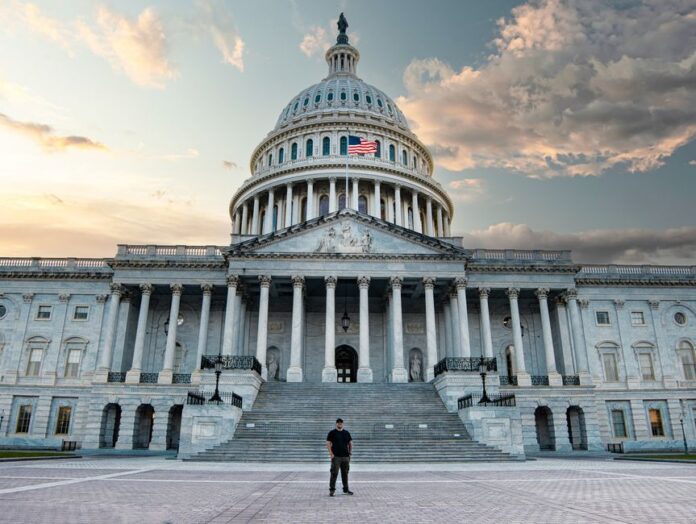
Photo: Edgar Arroyo / Pexels
By The News Beacon Newsroom, Politics Desk — Published November 13, 2026
Table of Contents
- Key Takeaways
- The Background & Context
- Why This Matters
- Reactions & Analysis
- What Happens Next
- Frequently Asked Questions
A seismic shift is underway in the upper chamber of Congress. Senator Chris Van Hollen of Maryland announced his intention to challenge Chuck Schumer for the position of Senate majority leader, marking the first serious contest for Democratic leadership in the Senate in nearly two decades. The move injects fresh uncertainty into a party already navigating turbulent political waters as it seeks to rebuild its electoral coalition and legislative strategy.
Van Hollen’s decision to enter the race represents a direct challenge to Schumer, who has led Senate Democrats since 2017 and served as the party’s leader through some of the most consequential legislative battles of recent years. The contest will test whether the caucus is ready for new leadership or prefers continuity in a time of political upheaval.
The leadership election comes at a critical juncture for Democrats, who find themselves in the minority after losing control of the Senate. How the party positions itself—and who leads that effort—will shape not only its legislative priorities but also its political fortunes heading into the next election cycle.
Key Takeaways
- Senator Chris Van Hollen of Maryland has announced he will run for Senate majority leader, directly challenging incumbent leader Chuck Schumer.
- This marks the first significant intraparty contest for Democratic Senate leadership in nearly two decades, signaling potential appetite for change within the caucus.
- The leadership race occurs as Democrats navigate minority status in the Senate and reassess their political strategy following recent electoral setbacks.
- Van Hollen’s challenge could reshape the party’s legislative priorities and approach to negotiations with Republicans.
- The outcome will influence Democratic positioning on key issues including the economy, healthcare, and climate policy in the coming years.
- Senate Democrats will need to decide between continuity under Schumer’s experienced hand or a new direction under Van Hollen’s leadership.
The Background & Context
Chuck Schumer has been a fixture of Senate Democratic leadership for years, rising through the ranks to become minority leader in 2017 and then majority leader when Democrats gained control of the chamber. His tenure has seen the passage of major legislation including pandemic relief packages, infrastructure investments, and climate initiatives. Yet leadership challenges, while rare, are not unprecedented in American politics—they often signal deeper currents of discontent or desire for strategic recalibration within a party.
Van Hollen, a former congressman who moved to the Senate in 2017, has built a reputation as a progressive voice on economic policy and foreign affairs. He previously served as the ranking member of the Democratic Senatorial Campaign Committee and has been involved in key negotiations on budget matters and sanctions policy. His decision to mount this challenge suggests he believes the caucus is ready for a different approach.
Senate leadership elections differ markedly from their House counterparts. The smaller, more collegial nature of the Senate means personal relationships and trust play outsized roles. Leaders must balance the demands of managing floor proceedings, negotiating with the opposing party, and maintaining unity among members who often represent vastly different constituencies and ideological perspectives.
The timing of this contest is particularly notable. Democrats are grappling with questions about their electoral strategy, messaging, and policy priorities after recent setbacks. Some members have called for fresh thinking on how to connect with working-class voters, while others emphasize the need for experienced leadership during divided government. Van Hollen’s challenge forces these debates into the open.
Why This Matters
Leadership fights are never merely about personalities. They’re referendums on direction, strategy, and vision. For ordinary Americans, the outcome of this contest will directly affect how Democrats approach legislation on issues that touch daily life: healthcare costs, tax policy, infrastructure investments, and regulatory oversight.
The Senate majority leader wields enormous power over which bills receive floor time, how negotiations with the White House and House of Representatives unfold, and what priorities the party emphasizes in public messaging. A new leader could shift the party’s focus, change its negotiating posture, or alter its approach to coalition-building with moderate Republicans on bipartisan initiatives.
For voters who supported Democratic candidates expecting certain policy outcomes, this leadership election will determine whether those promises can be effectively pursued. The leader sets the legislative agenda, decides which fights to pick, and determines when compromise is acceptable versus when to draw hard lines. These strategic choices cascade down to affect everything from prescription drug prices to climate regulations to judicial confirmations.
The contest also matters for the health of democratic institutions themselves. Internal party elections, when conducted fairly and openly, demonstrate that political organizations remain responsive to their members rather than calcified around entrenched interests. Competitive leadership races can energize caucuses, surface new ideas, and ensure that leaders remain accountable to those they represent.
Economic policy will likely be a central battleground. Van Hollen has emphasized progressive economic positions throughout his career, while Schumer has balanced various wings of the party on fiscal matters. The next leader will help shape Democratic responses to inflation, tax reform, and federal spending—issues with direct implications for household budgets across the country.
Reactions & Analysis
The announcement has sent ripples through Washington’s political establishment, with lawmakers and strategists parsing what the challenge means for the party’s future. Leadership contests typically force senators to declare their allegiances publicly or privately, creating temporary fissures that must be mended regardless of the outcome.
Political observers note that successful leadership challenges require careful coalition-building across the caucus’s ideological spectrum. Van Hollen will need to convince progressives that he offers a more aggressive approach while simultaneously reassuring moderates that he can work across the aisle when necessary. That’s a delicate balance in a party that spans from democratic socialists to centrists representing purple states.
The challenge also raises questions about generational change within the party. While both Van Hollen and Schumer are experienced lawmakers, leadership transitions often reflect broader desires for new energy and fresh perspectives. Some caucus members may view this as an opportunity to elevate different voices and approaches without necessarily criticizing Schumer’s tenure.
Campaign veterans and legislative strategists are watching closely to see how the contest unfolds. Will it be a cordial competition focused on policy differences, or will it become more pointed? The tone will matter both for party unity after the election and for public perceptions of Democratic cohesion heading into future campaigns.
Institutional dynamics are also in play. Senators tend to value experience and proven ability to manage complex legislative negotiations. Schumer can point to significant accomplishments under challenging circumstances. Van Hollen must make the case that change is worth the risk of losing that institutional knowledge and established relationships.
What Happens Next
The Democratic caucus will need to conduct its leadership election, a process that typically involves private deliberations, one-on-one conversations, and ultimately a vote among all Democratic senators. Both candidates will make their cases through individual meetings, caucus presentations, and possibly public statements outlining their visions for the party’s direction.
Regardless of who prevails, the contest will likely influence Democratic strategy going forward. Even if Schumer retains his position, the challenge may push him to adopt some of Van Hollen’s priorities or adjust his approach to address concerns that motivated the contest. Leadership elections often produce policy commitments and strategic shifts that outlast the vote itself.
The outcome will also affect committee assignments, legislative priorities, and the party’s negotiating posture with Republicans. A new leader typically brings new staff, new relationships, and new approaches to floor management and caucus discipline. These changes ripple through the institution in ways that affect which bills advance and how negotiations proceed.
Looking further ahead, this leadership fight may preview larger debates about the Democratic Party’s future. How the caucus resolves questions about leadership style, policy priorities, and political strategy in this contest could signal how it approaches similar questions in other contexts, from presidential primaries to state-level races.
The American public should pay attention not just to who wins, but to what commitments emerge from the process. Leadership elections can be moments of genuine deliberation about direction and values, or they can be mere personality contests. The substance of this debate will reveal much about where Senate Democrats see their party heading.
Frequently Asked Questions
What does the Senate majority leader actually do?
The Senate majority leader controls the legislative calendar, deciding which bills come to the floor for debate and votes. The leader also serves as the primary spokesperson for their party, negotiates with the minority leader and the White House, and works to maintain party unity on key votes. In practice, the majority leader wields enormous influence over what legislation can realistically pass and shapes the strategic direction of their caucus.
How often do Senate leadership challenges happen?
Serious challenges to sitting Senate leaders are relatively rare, particularly when the leader hasn’t faced a major scandal or catastrophic electoral defeat. The last significant Democratic leadership contest in the Senate occurred nearly two decades ago. Leaders typically retain their positions until they retire or their party suffers major losses that prompt calls for new direction. The rarity of such challenges makes Van Hollen’s decision particularly noteworthy.
Will this leadership fight hurt Democratic unity?
Leadership contests always carry some risk of creating divisions, but they can also be healthy exercises in democratic deliberation. The key is how the contest is conducted and whether the loser’s supporters are brought back into the fold afterward. Historically, parties have managed to heal from leadership fights when both sides emphasize shared goals and mutual respect. The impact on unity will depend largely on how Van Hollen and Schumer conduct their campaigns and how graciously the losing side accepts the outcome.
What are the main differences between Van Hollen and Schumer’s approaches?
While both are experienced Democratic lawmakers, Van Hollen has cultivated a reputation as a more consistently progressive voice, particularly on economic policy and foreign affairs. Schumer has positioned himself as a pragmatic coalition-builder who works across the party’s ideological spectrum. The contest may hinge on whether senators prioritize bold progressive advocacy or experienced institutional navigation. Both candidates will likely emphasize their ability to unite the caucus and advance Democratic priorities, but their strategic approaches and policy emphases may differ in meaningful ways.
The coming weeks will test whether Senate Democrats are ready for a new chapter or prefer the continuity of established leadership. Either way, this contest forces important conversations about the party’s future—conversations that will shape American politics for years to come. Democracy works best when leaders must earn their positions rather than simply inherit them, and this challenge ensures that whoever leads Senate Democrats will do so with a clear mandate from their colleagues.


