
By The News Beacon Newsroom, Economy Desk — Published October 6, 2026
Table of Contents
- Key Takeaways
- The Background & Context
- Why This Matters
- Reactions & Analysis
- What Happens Next
- Frequently Asked Questions
Wall Street finds itself in a holding pattern. Recent charts markets stocks data reveal an unusual divergence: equity indexes hover near recent levels while bond markets convulse under pressure from stubborn inflation and uncertain interest rate policy. For American investors, retirees with bond-heavy portfolios, and anyone watching their 401(k), this split personality in financial markets signals deeper economic crosscurrents that demand attention.
The stock market’s relative calm masks anxiety rippling through fixed-income securities. Bond yields have jumped as traders recalibrate expectations about how aggressively the Federal Reserve will fight inflation. Meanwhile, employment data released in September showed job growth cooling—a development that has forced market participants to dial back their most aggressive predictions for future rate hikes.
This disconnect matters. When stocks tread water but bonds shudder, it often reflects investor confusion about the economy’s direction. Are we headed for a soft landing, or something rougher?
Key Takeaways
- Stock markets have remained relatively stable even as bond markets experience significant volatility, reflecting investor uncertainty about economic direction.
- September jobs data came in softer than expected, prompting markets to reduce expectations for additional Federal Reserve interest rate increases.
- Bond market turbulence suggests investors are grappling with persistent inflation concerns and the trajectory of monetary policy.
- The divergence between equity and fixed-income markets creates strategic challenges for investors trying to position portfolios amid conflicting signals.
- Market analysts are actively reassessing stock recommendations, with some companies now viewed as sells while others emerge as buying opportunities heading into the fourth quarter.
- The interplay between jobs, inflation, and interest rates continues to drive market sentiment and Federal Reserve decision-making.
The Background & Context
To understand today’s market dynamics, rewind to the Federal Reserve’s aggressive campaign against inflation that began in early 2022. The central bank raised interest rates at the fastest pace in decades, lifting the federal funds rate from near zero to over five percent. That medicine worked—sort of. Inflation fell from its peak above nine percent, but has proven sticky around three to four percent, well above the Fed’s two percent target.
Bond markets react viscerally to inflation and rate expectations. When investors believe rates will stay higher for longer, bond prices fall and yields rise. That’s exactly what happened recently. The benchmark 10-year Treasury yield climbed significantly, reaching levels not seen in years. For bondholders, especially retirees relying on fixed-income investments for stability, this volatility stings. Bond prices and yields move inversely, meaning existing bonds lose value when rates climb.
Stock markets, meanwhile, have shown surprising resilience. Major indexes have largely held their ground despite the bond market’s distress. This stability reflects competing forces: corporate earnings have held up better than feared, but higher interest rates make future profits less valuable and increase borrowing costs. Technology stocks, particularly sensitive to rate changes, have experienced choppiness. Yet the broader market has avoided a rout.
Enter the September jobs report. Employment growth decelerated more than economists anticipated. Fewer new jobs mean less wage pressure, which could help tame inflation. That’s good news for the Fed’s inflation fight but raises questions about economic momentum. Can the economy keep growing if hiring slows significantly? Market participants immediately recalibrated, pulling back expectations for another rate hike at upcoming Federal Reserve meetings.
Why This Matters
For most Americans, abstract talk of bond yields and Fed policy feels distant from daily life. It shouldn’t. These market movements have real consequences.
First, consider mortgages. The 30-year fixed mortgage rate tracks the 10-year Treasury yield closely. When bond yields spike, home loan rates follow. That means buying a house becomes more expensive, monthly payments rise, and homeownership slips further from reach for many families. The housing market, a traditional engine of American wealth-building, stalls when rates climb too high.
Second, retirement accounts take a hit when bond portfolios lose value. Millions of Americans approaching retirement hold balanced portfolios with significant bond allocations, expecting stability. When bonds shudder, that safety net frays. Retirees living on fixed income face a particularly cruel squeeze: their bond holdings lose value while everyday expenses remain elevated by lingering inflation.
Third, the jobs picture affects everyone. A cooling labor market might ease inflation, but it also means fewer opportunities for workers seeking better pay or new positions. Wage growth slows. Job security becomes less certain. The balance between fighting inflation and maintaining employment is delicate, and the Fed walks a tightrope.
Fourth, stock market stability—or lack thereof—influences consumer confidence and spending. When Americans see their brokerage statements holding steady or growing, they feel wealthier and spend more freely. That spending drives economic growth. If stocks eventually follow bonds downward, the wealth effect reverses, potentially accelerating any economic slowdown.
Reactions & Analysis
Market analysts are actively repositioning their recommendations in response to these crosscurrents. Some stocks that looked attractive months ago now face headwinds from higher rates and economic uncertainty. Conversely, other companies appear better positioned for the current environment, prompting buy recommendations as the fourth quarter begins.
The soft September jobs report triggered immediate reassessment across Wall Street trading desks. Before that data, many traders had priced in at least one more rate increase before year-end. After the report, those expectations diminished sharply. Federal Reserve officials themselves have signaled a data-dependent approach, meaning each employment and inflation report carries outsized weight in determining policy.
Bond market participants remain on edge. Some fixed-income investors see current yields as attractive entry points, arguing that rates have peaked or will soon. Others warn that inflation could resurge, forcing the Fed to maintain restrictive policy longer than markets expect. This disagreement fuels volatility.
Equity strategists point to the divergence between stocks and bonds as evidence of market confusion. Normally, these asset classes move in rough coordination, both responding to economic fundamentals. When they split, it suggests investors cannot agree on the economic outlook. Some see resilience and opportunity; others see danger ahead.
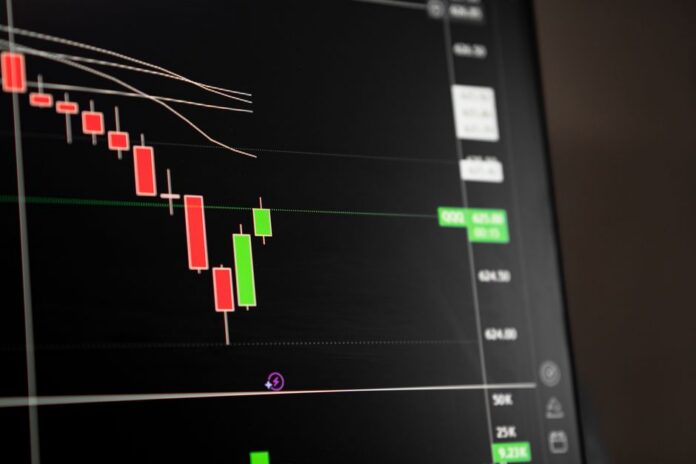
The chart-driven analysis circulating among professional investors highlights several key trends: Treasury yields at multi-year highs, equity volatility indexes elevated but not panicked, credit spreads widening modestly, and sector rotation favoring defensive industries over growth-oriented technology. Each chart tells part of the story, but the full picture remains frustratingly unclear.
What Happens Next
The next several months will clarify whether the economy can achieve the elusive soft landing—slowing enough to kill inflation without triggering recession. Several scenarios loom.
If inflation continues falling while employment remains relatively healthy, the Fed can pause rate hikes and eventually cut. Bond markets would stabilize, yields would decline, and stocks could rally on relief that the worst has passed. This optimistic path requires threading a narrow needle.
Alternatively, inflation could prove more stubborn, forcing the Fed to raise rates further or keep them elevated longer. That would likely push bond yields higher still and eventually pressure stocks as economic growth falters. Recession risk would rise substantially.
A third possibility: the economy slows faster than expected, unemployment rises, and the Fed is forced to cut rates to prevent a deeper downturn. Bonds would rally, but stocks might struggle amid deteriorating corporate earnings.
Investors face difficult choices. Rebalancing portfolios amid such uncertainty requires careful thought about risk tolerance and time horizon. Younger investors with decades until retirement might view current volatility as a buying opportunity. Those nearing retirement must weigh the need for stability against the risk of missing recovery gains.
The Federal Reserve’s upcoming meetings will be crucial. Every word from Chair Jerome Powell gets parsed for hints about policy direction. Employment reports, inflation data, and consumer spending figures will drive market reactions in the near term.
Frequently Asked Questions
Why are bond markets more volatile than stock markets right now?
Bond markets are extremely sensitive to interest rate expectations and inflation. Recent data has created uncertainty about how long the Federal Reserve will maintain high rates, causing bond yields to swing as investors constantly reassess. Stocks, while affected by rates, also respond to corporate earnings and economic growth expectations, which have remained relatively stable, creating less dramatic price movements in equity markets compared to the turbulence in fixed-income securities.
How does the September jobs report affect my investments?
The softer-than-expected September employment data suggests the economy is cooling, which reduces the likelihood of additional Federal Reserve rate hikes. For bond investors, this means yields may stabilize or decline, potentially supporting bond prices. For stock investors, it’s a mixed signal: less aggressive Fed policy is positive, but slowing job growth could indicate weakening economic momentum that might eventually hurt corporate profits and stock valuations.
Should I be worried about my retirement account with all this bond market volatility?
Bond volatility is concerning, especially for those near retirement with significant fixed-income allocations. However, bonds still serve their purpose as portfolio stabilizers relative to stocks. If you’re years from retirement, short-term bond price fluctuations matter less than long-term returns. If you’re close to retirement or already retired, reviewing your asset allocation with a financial advisor makes sense to ensure your portfolio matches your risk tolerance and income needs during this uncertain period.
What does it mean when analysts say to sell some stocks and buy others?
Market conditions constantly change, affecting different companies and sectors unevenly. When interest rates rise and economic growth questions emerge, some businesses face greater challenges while others are better positioned. Analysts reassess which stocks offer the best risk-reward profiles under current conditions. Sell recommendations typically target companies vulnerable to higher rates or economic slowdowns, while buy recommendations focus on firms with strong fundamentals, reasonable valuations, or defensive characteristics that should hold up better in uncertain times.
Markets rarely provide clear signals, and today’s mixed messages—stable stocks, shaking bonds, cooling jobs—exemplify that ambiguity. American investors, from Wall Street professionals to Main Street savers, must navigate these crosscurrents with care. The interplay between inflation, employment, and interest rates will define market direction in coming months. Stay informed, stay balanced, and remember that volatility, while uncomfortable, is part of investing’s terrain.


