
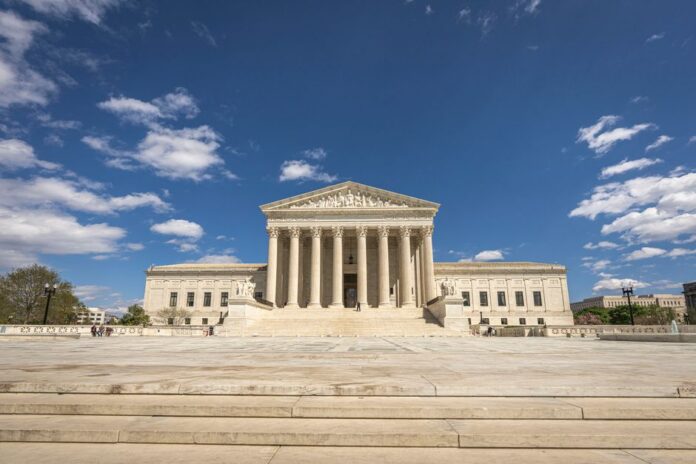
Photo: Mark Stebnicki / Pexels
By The News Beacon Newsroom, National Desk — Published October 8, 2026
Table of Contents
- Key Takeaways
- The Background & Context
- Why This Matters
- Reactions & Analysis
- What Happens Next
- Frequently Asked Questions
The nation’s highest court has handed states a significant new tool in their efforts to verify voter eligibility. In a decision that arrives just as midterm election preparations intensify, the Supreme Court revives a disputed federal database system that allows states to cross-reference voter rolls against citizenship records. The ruling marks a victory for former President Trump and states seeking tighter controls over voter registration, while raising alarm among civil rights advocates who warn of potential disenfranchisement.
The decision centers on access to a federal data system that critics argue could be used to improperly challenge the voting rights of naturalized citizens and others. With election officials already deep into preparations for upcoming midterm contests, the timing of this ruling injects fresh uncertainty into an already contentious national debate over voting access and election security.
At stake is the delicate balance between states’ authority to maintain accurate voter rolls and the constitutional guarantee that eligible citizens can exercise their franchise without undue burden. The controversy touches fundamental questions about federalism, data privacy, and the integrity of American democracy itself.
Key Takeaways
- The Supreme Court has authorized states to use a controversial federal citizenship database for conducting voter registration audits.
- The decision represents a legal win for former President Trump and states advocating for stricter voter verification measures.
- The ruling arrives during the critical period leading up to midterm elections, potentially affecting how states manage their voter rolls.
- Civil rights organizations have long opposed the data tool, arguing it could lead to wrongful voter purges and disenfranchisement of eligible citizens.
- The database cross-references voter registration information with federal citizenship records to identify potential discrepancies.
- The decision highlights ongoing tensions between election security concerns and voting access protections.
The Background & Context
The federal database at the center of this controversy has been a flashpoint in American election policy for years. The system was designed to help states verify the citizenship status of registered voters by comparing state voter rolls against federal immigration and naturalization records. Proponents argue such tools are essential for maintaining the integrity of elections and ensuring that only eligible citizens participate in the democratic process.
But the road to implementation has been rocky. Critics have documented numerous cases where the database flagged naturalized citizens as potentially ineligible, creating bureaucratic nightmares for voters who had to prove their citizenship despite having already done so during the naturalization process. The margin for error in such systems can be significant, particularly when databases fail to update in real time or when name variations create false matches.
The legal battle over this particular data tool reflects broader national tensions. Conservative-led states have pushed for expanded verification measures, citing concerns about non-citizen voting—a phenomenon that multiple studies have found to be extraordinarily rare. Meanwhile, voting rights advocates point to documented cases of eligible voters being wrongly purged from rolls or forced to navigate additional bureaucratic hurdles to cast their ballots.
The Supreme Court’s involvement signals the constitutional weight of these competing interests. Federal courts have grappled with where to draw the line between legitimate election administration and measures that might suppress legitimate voting. The justices’ decision to allow states access to this database tilts that balance, at least for now, toward state authority in managing voter eligibility verification.
Why This Matters
For millions of Americans, particularly naturalized citizens, this ruling could mean additional scrutiny of their voter registration status. The database system relies on matching records across different government agencies—a process that experts acknowledge is imperfect. A misspelled name, a data entry error, or a lag in updating records could trigger a challenge to someone’s registration.
The timing amplifies the stakes. Midterm elections often see lower turnout than presidential contests, meaning even small changes in voter registration could shift outcomes in competitive races. Election administrators now face the challenge of implementing or expanding use of this database while ensuring they don’t violate voters’ rights or create chaos at polling places.
The decision also touches on fundamental questions about government data sharing. When federal agencies collect information for one purpose—processing immigration paperwork, for instance—should that data automatically become available for other government functions like voter verification? Privacy advocates warn of mission creep, where databases built for specific purposes gradually expand their reach.
From a practical standpoint, local election officials must now decide whether to use this tool and how aggressively to pursue any discrepancies it identifies. A conservative approach might mean fewer false positives but potentially miss genuine ineligibility. An aggressive strategy could catch more problems but also wrongly flag legitimate voters, creating administrative burdens and potentially disenfranchising citizens.
The broader implications extend to public trust in elections. Supporters of verification measures argue they bolster confidence in election outcomes. Opponents counter that high-profile purges of voter rolls, even when later corrected, can undermine faith in the system and discourage participation. Both perspectives reflect genuine concerns about the health of American democracy.
Reactions & Analysis
The ruling has generated predictably divided responses across the political spectrum. States that have advocated for stricter voter verification measures view the decision as vindication of their authority to administer elections and maintain accurate rolls. For them, access to federal citizenship data represents a common-sense tool that should have been available all along.
Voting rights organizations, however, see the decision as opening the door to potentially discriminatory practices. They point to historical patterns where voter verification measures have disproportionately affected minority communities, creating barriers to participation that fall most heavily on those least able to navigate bureaucratic challenges. The concern is not theoretical—previous voter purge efforts in several states have removed eligible voters, forcing them to re-register or cast provisional ballots.
Legal scholars note that the Supreme Court’s decision doesn’t resolve all questions surrounding the database’s use. States still must comply with federal voting rights laws when conducting any voter roll maintenance. The National Voter Registration Act, for instance, requires specific procedures and timelines for removing voters from rolls. How states balance their new access to citizenship data with these existing legal requirements will likely generate further litigation.
Election administrators themselves occupy an uncomfortable middle ground. They face pressure from multiple directions: to ensure only eligible voters participate, to protect the rights of all registered citizens, to maintain public confidence, and to run smooth elections without last-minute complications. The database gives them a new tool, but also a new source of potential controversy and workload.
What Happens Next
In the immediate term, states must decide how to incorporate this database access into their existing voter roll maintenance procedures. Some may move quickly to cross-reference their entire voter files, while others may take a more cautious approach, using the database only for targeted inquiries when other red flags appear.
Legal challenges will almost certainly continue. While the Supreme Court has authorized use of the database, specific implementation practices could still face court scrutiny. If states use the data in ways that disproportionately affect protected classes or violate procedural requirements, litigation will follow. The next battleground may shift from whether states can access the data to how they’re allowed to use it.
Congress could theoretically step in to establish clearer rules around federal database sharing for election purposes, though the current political climate makes major voting legislation unlikely. Any such effort would need to navigate the same partisan divisions that have stalled other election reform proposals.
For voters themselves, vigilance becomes more important. Checking registration status regularly, particularly in states that announce plans to use the citizenship database, can help catch problems before election day. Many states now offer online portals where citizens can verify their registration and update information as needed.
The longer-term trajectory depends partly on how states actually use this new authority. If implementation proves relatively smooth, with few eligible voters wrongly challenged, the controversy may fade. But high-profile cases of citizens improperly removed from rolls could reignite the debate and potentially lead to legislative or judicial intervention.
Frequently Asked Questions
What exactly does this Supreme Court decision allow states to do?
The decision permits states to access and use a federal database that contains citizenship information for the purpose of auditing their voter registration rolls. States can cross-reference their voter files against this federal data to identify potential discrepancies in citizenship status. However, states must still follow existing federal laws governing how and when voters can be removed from registration rolls.
Does this mean non-citizens have been voting in large numbers?
No credible evidence supports claims of widespread non-citizen voting. Multiple comprehensive studies have found that non-citizen voting is extremely rare, typically involving isolated cases rather than systematic fraud. The database is intended to help states verify eligibility, but its authorization doesn’t indicate that previous elections suffered from significant non-citizen participation.
Could eligible citizens lose their right to vote because of this database?
There is concern that database matching errors could flag eligible voters, particularly naturalized citizens, as potentially ineligible. Data mismatches can occur due to name variations, clerical errors, or outdated records. If states act on such false positives without proper safeguards, eligible voters could face challenges to their registration. Federal law requires specific procedures before removing anyone from voter rolls, including notice and opportunity to respond.
How will this affect the upcoming midterm elections?
The impact will vary by state depending on whether and how aggressively officials choose to use the database. Some states may conduct audits that could lead to voter registration challenges, while others may take no immediate action. Voters in states that announce database-matching initiatives should verify their registration status well before election day to ensure any problems can be resolved in time.
As Americans head toward another consequential election cycle, this Supreme Court decision adds another layer to ongoing debates about voting access and security. The database is now available. How states choose to use it—and how courts, advocates, and voters respond—will shape its ultimate impact on American democracy. For now, the tool exists, the authority is granted, and the consequences remain to be seen.


