
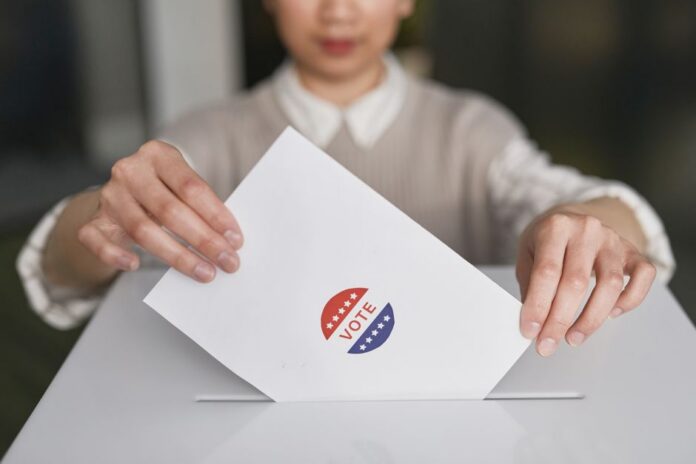
Photo: Edmond Dantès / Pexels
By The News Beacon Newsroom, Economy Desk — Published November 4, 2026
Table of Contents
- Key Takeaways
- The Background & Context
- Why This Matters
- Reactions & Analysis
- What Happens Next
- Frequently Asked Questions
Wall Street is bracing for turbulence. As midterm elections approach, investors face a question that could reshape portfolios across America: what happens to the stock market if Democrats sweep Congress? The possibility has sent ripples through trading floors, with futures markets already reacting to early election signals. Midterm elections could deliver one of several outcomes, each carrying distinct implications for the economy, inflation, jobs, and interest rates—the very factors that determine whether your retirement account grows or shrinks.
Recent reports indicate stock futures have tumbled as Democrats notch key wins in closely watched races. The market’s jittery response reflects uncertainty about policy shifts that might follow a change in congressional power. From tax legislation to regulatory frameworks, the composition of Congress directly influences corporate earnings and economic growth.
Yet historical data suggests a more nuanced picture. While short-term volatility may grab headlines, the long-term relationship between political control and market performance is far more complex than conventional wisdom suggests. For millions of Americans whose financial futures depend on stock market health—through 401(k)s, pensions, and savings accounts—understanding these dynamics matters deeply.
Key Takeaways
- Stock futures have declined following Democratic victories in key midterm election races, signaling immediate market nervousness about potential policy changes.
- A Democratic sweep of Congress could trigger significant stock market movements as investors reassess expectations for corporate taxation, regulation, and economic policy.
- Historical analysis suggests that despite short-term reactions, the long-term impact of congressional composition on stock performance may be limited.
- Market volatility surrounding midterm elections reflects broader concerns about inflation, interest rates, and economic stability that affect everyday Americans.
- Investors are weighing multiple scenarios as election results unfold, with different outcomes carrying varying implications for sectors from healthcare to energy.
- The intersection of politics and markets underscores how electoral decisions reach directly into the wallets of ordinary citizens through retirement accounts and investment portfolios.
The Background & Context
Midterm elections have historically served as inflection points for financial markets. Investors dislike uncertainty. Elections inject massive doses of it into the system. The current election cycle arrives at a particularly sensitive moment for the economy, with inflation concerns lingering and the Federal Reserve navigating a delicate path on interest rates.
When one party controls both chambers of Congress, legislative agendas move faster. Bills pass more easily. Policy changes accelerate. For Wall Street, this means quicker shifts in the regulatory environment, tax code, and spending priorities. A Democratic sweep would likely empower the party to advance its economic agenda with fewer obstacles—a prospect that generates both enthusiasm and anxiety depending on which side of the trade you occupy.
The stock market’s immediate reaction to Democratic wins reflects this calculus. Traders are pricing in potential changes to corporate tax rates, which directly affect company profits and therefore stock valuations. They’re also considering new regulatory approaches to industries from technology to pharmaceuticals. Every percentage point change in the corporate tax rate translates to billions in earnings across the market.
But here’s where it gets interesting. Despite the drama of election night market swings, academic research and historical analysis paint a different picture for long-term investors. Markets have thrived under both Democratic and Republican control. They’ve stumbled under both as well. Economic fundamentals—corporate earnings, consumer spending, productivity growth—typically matter more than which party holds the gavel in Congress.
Why This Matters
For the average American, this isn’t abstract financial theory. It’s personal. Roughly half of U.S. households own stocks either directly or through retirement accounts. When markets jolt, real people feel it. A retiree watching their nest egg shrink experiences genuine anxiety. A young worker sees their 401(k) balance drop and questions their financial planning.
The connection between elections and the economy runs deeper than stock prices alone. Congressional control determines fiscal policy—government spending and taxation—which shapes job creation, wage growth, and inflation. These factors touch every household budget, from grocery bills to mortgage payments.
Consider the ripple effects. If market volatility prompts companies to pause hiring or investment, unemployment could tick upward. If new tax policies reduce corporate profits, businesses might cut costs through layoffs or reduced benefits. Conversely, if Democratic policies stimulate certain sectors through infrastructure spending or green energy investments, new job opportunities could emerge.
The inflation picture adds another layer of complexity. Voters consistently rank rising prices among their top concerns. How Congress approaches fiscal policy—whether pursuing additional stimulus or pulling back spending—directly influences inflationary pressure. The Federal Reserve watches these fiscal decisions closely when setting interest rates, which in turn affect everything from car loans to credit card bills.
Wall Street’s reaction to election outcomes also reflects global investor confidence in American economic stability. When markets swing wildly, it signals uncertainty that can affect the dollar’s value, international trade relationships, and America’s ability to attract foreign investment. These macroeconomic forces ultimately determine whether good jobs remain plentiful and whether paychecks stretch far enough to cover rising costs.
Reactions & Analysis
The financial community’s response to Democratic election gains has been swift and measurable. Futures markets—where traders bet on tomorrow’s stock prices—showed immediate declines as results came in. This reaction reflects Wall Street’s attempt to price in new probabilities about policy direction.
Yet analysts caution against reading too much into initial market moves. Election night volatility often proves fleeting. Professional investors distinguish between noise and signal, between temporary jitters and fundamental shifts in economic outlook. The question isn’t whether stocks dip on election night—they often do regardless of outcome—but whether the political landscape changes the long-term earnings potential of American companies.
Some market observers emphasize that historical patterns show surprisingly little correlation between party control and stock performance. Markets have delivered strong returns under divided government, unified Democratic control, and unified Republican control. The S&P 500 has climbed walls of worry regardless of who occupies congressional offices. This historical perspective suggests that while midterm elections could create short-term turbulence, patient investors focused on long-term goals might be wise to avoid panic.
Other analysts point to specific policy proposals that could materially affect certain sectors. Healthcare stocks might face pressure if Democrats pursue drug pricing reforms. Energy companies could see divergent fortunes depending on climate policy direction. Technology firms watch antitrust enforcement closely. These sector-specific considerations matter more to professional investors than broad market predictions.
The divergence in expert opinion itself tells a story. When smart people disagree about market implications, it usually means the situation is genuinely complex. Simple narratives—”Democrats bad for stocks” or “Republicans good for markets”—rarely capture reality. Economic performance depends on countless variables, from global trade dynamics to technological innovation to consumer confidence. Elections influence some of these variables but not all of them.
What Happens Next
The coming months will test competing theories about politics and markets. If Democrats consolidate power, their legislative priorities will quickly become clear. Tax proposals will emerge. Regulatory agencies will shift direction. Spending bills will reflect new priorities. Each development will prompt market reassessment.
Investors will watch several key indicators closely. Corporate earnings reports will reveal whether companies face meaningful headwinds from policy changes. Economic data on jobs, inflation, and growth will show whether fiscal policy supports or hinders recovery. Federal Reserve communications will signal how monetary policy adapts to the new political landscape.
For ordinary Americans, the practical implications unfold more slowly. Policy changes take time to implement. Tax law revisions don’t happen overnight. Regulatory shifts require rulemaking processes. The gap between election results and real-world impact can span months or years.
This lag creates both opportunity and risk. Investors who correctly anticipate policy direction can position portfolios advantageously. Those who guess wrong or overreact to headlines may lock in losses unnecessarily. The wisest approach for most people involves maintaining diversified investments aligned with long-term goals rather than making dramatic moves based on election outcomes.
The broader economic picture will likely matter more than political composition. If inflation moderates and interest rates stabilize, markets could rally regardless of congressional control. If economic headwinds intensify, stocks might struggle even with favorable political conditions. Context matters enormously.
Frequently Asked Questions
How do midterm elections typically affect the stock market?
Historically, midterm elections create short-term volatility as markets adjust to new political realities, but long-term stock performance shows little consistent correlation with which party controls Congress. Markets have delivered positive returns under various political configurations. Economic fundamentals like corporate earnings, interest rates, and consumer spending typically matter more than election outcomes for long-term investors. The immediate reaction often reflects uncertainty rather than predictable directional movement.
Why did stock futures fall after Democratic election wins?
Stock futures declined as traders priced in the possibility of policy changes under Democratic congressional control, including potential corporate tax increases and new regulations that could affect business profits. Markets dislike uncertainty, and election results that shift the balance of power create questions about future policy direction. However, these initial reactions don’t necessarily predict long-term market performance and often reverse as uncertainty resolves.
Should ordinary investors change their portfolios based on election results?
Most financial advisors caution against making dramatic portfolio changes based solely on election outcomes. Market timing is notoriously difficult, and political predictions often prove wrong. For long-term investors saving for retirement or other distant goals, maintaining a diversified portfolio aligned with your risk tolerance and time horizon typically produces better results than reacting to political news. Short-term volatility creates more risk for those who trade frequently than for those who stay invested.
What economic policies might change if Democrats sweep Congress?
A Democratic congressional sweep could enable the party to pursue tax policy changes, including potential increases in corporate tax rates and higher taxes on wealthy individuals. Other possible priorities include healthcare reforms, climate and energy legislation, infrastructure spending, and changes to labor and regulatory policy. The actual implementation and scope of such changes would depend on the size of Democratic majorities and the willingness of moderate members to support ambitious legislation.
As election results continue to unfold and markets digest their implications, Americans face a reminder that democracy and economics intertwine in complex ways. The votes we cast shape not just abstract policy but concrete realities in our financial lives. Whether the current market turbulence proves temporary or signals deeper shifts, one thing remains certain: the choices made in voting booths ripple through trading floors and eventually into the retirement accounts and job prospects of millions of citizens who may never set foot on Wall Street.


