
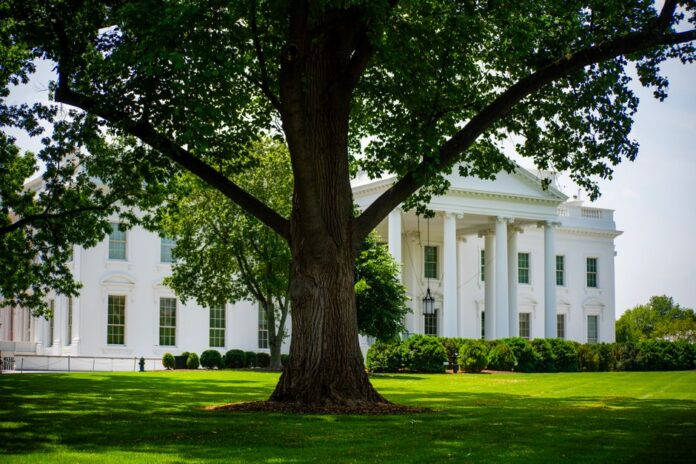
Photo: Ramaz Bluashvili / Pexels
By The News Beacon Newsroom, Politics Desk — Published September 25, 2026
Table of Contents
- Key Takeaways
- The Background & Context
- Why This Matters
- Reactions & Analysis
- What Happens Next
- Frequently Asked Questions
A new advertising campaign celebrating President Trump has hit television screens across America, paid for not by a political committee or campaign donors, but by American taxpayers. The White House says the ads are legitimate public service announcements. Critics call it government-funded propaganda. The controversy cuts to the heart of long-standing prohibitions against using federal funds for political purposes.
The ad, titled “Love Me,” features messaging focused on the Trump administration and its policies. According to multiple news reports, the campaign is funded directly by the U.S. government—a designation that has ignited fierce debate about the appropriate use of taxpayer dollars and the legal boundaries separating official government communications from political campaign material. The White House has defended the expenditure as a proper use of federal resources for informing the public.
This development arrives at a particularly sensitive moment in American politics, with campaign season dynamics already shaping congressional agendas and public discourse. Questions about the intersection of governance and electioneering have taken on renewed urgency as lawmakers and watchdog groups scrutinize whether the administration has crossed ethical and legal lines.
Key Takeaways
- A new advertising campaign focused on President Trump is airing on television networks, funded by the U.S. government rather than campaign contributions.
- The White House has characterized the ads as public service announcements, defending their use of taxpayer money for the messaging.
- News reports indicate the campaign is running despite federal laws that prohibit the use of government funds for propaganda purposes.
- The controversy raises fundamental questions about the boundary between legitimate government communication and political advertising.
- The ads have sparked criticism from those who argue taxpayers should not be financing content that appears to promote a specific political figure.
- The situation has implications for how future administrations might use federal resources during election cycles and beyond.
The Background & Context
Federal law has long prohibited the use of appropriated funds for what is classified as propaganda. These restrictions exist to prevent administrations from using the machinery and treasury of government to promote partisan political interests. The principle is straightforward: taxpayer dollars should fund the business of governing, not the business of campaigning.
Public service announcements from government agencies are commonplace and generally uncontroversial. Americans regularly see federally funded messages about public health initiatives, safety campaigns, census participation, and emergency preparedness. These communications serve a clear governmental function: informing citizens about programs, services, or actions they need to know about.
The line blurs when government messaging appears to celebrate or promote individual political figures rather than policies or programs. Previous administrations have faced scrutiny over communications that seemed to cross from informational into promotional territory. But the explicit funding of ads that focus on a sitting president by name represents a particularly stark test of those boundaries.
The legal framework governing such expenditures includes appropriations riders that prohibit “publicity or propaganda purposes” not authorized by Congress. The Government Accountability Office has in the past issued decisions finding certain agency communications violated these restrictions when they were deemed covert propaganda or self-aggrandizing.
What distinguishes a legitimate public service announcement from prohibited propaganda? Intent and content matter. If the primary purpose is to inform the public about available government services or important civic responsibilities, it typically passes muster. If the primary purpose appears to be building support for a political figure or party, it runs afoul of the law.
Why This Matters
For American taxpayers, this controversy raises immediate practical concerns. Every dollar spent on advertising comes from the federal treasury—money collected through taxes. Citizens across the political spectrum have a stake in ensuring those funds are used appropriately and legally.
The precedent being set carries weight far beyond this single ad campaign. If an administration can freely use government funds to air messages promoting the president, future occupants of the White House—regardless of party—could do the same. The cumulative effect could transform government communications into a permanent campaign operation funded by citizens who may vehemently oppose the messages being broadcast in their name.
Congress holds the constitutional power of the purse. Legislation dictates how executive agencies can spend appropriated funds. When those restrictions are sidestepped or reinterpreted, it represents a shift in the balance of power between branches. Lawmakers from both parties have historically defended congressional prerogatives in budget matters, making this a question that transcends immediate partisan advantage.
For voters, the issue touches on fundamental questions of fairness in the democratic process. Elections are supposed to be contests where candidates and parties raise private funds to make their case to the electorate. When one side can tap the federal treasury for promotional messaging, it distorts the competitive landscape.
The controversy also affects public trust in government institutions. When citizens cannot easily distinguish between official government information and political messaging, it erodes confidence in the neutrality and credibility of federal communications. That trust is essential for effective governance, particularly during emergencies when the public needs reliable information from authoritative sources.
Reactions & Analysis
The White House defense rests on the characterization of the ads as public service announcements rather than political material. By framing the campaign this way, administration officials argue they are engaged in legitimate government communication—informing the public about policies, achievements, or initiatives.
Critics reject this framing entirely. They point to the content and tone of the advertising as evidence of its political nature. An ad that centers on a specific political figure, they argue, serves campaign purposes regardless of what label the White House applies to it. The funding source—U.S. government rather than campaign or party funds—makes the distinction legally significant.
Legal experts and government watchdog organizations are likely examining whether the ads violate appropriations law. Past GAO opinions have found violations when agencies produced materials that were essentially self-promotional or when they failed to identify government funding sources in ways that made the communications covert propaganda.
The political ramifications extend beyond the immediate legal questions. Opposition lawmakers may use the controversy to raise broader concerns about executive overreach and misuse of federal resources. Oversight hearings could probe the decision-making process behind the ad campaign, including who authorized the expenditure and what legal review took place.
For the public, reactions likely divide along familiar partisan lines. Supporters of the administration may see the ads as appropriate communication about government activities. Critics view them as an abuse of taxpayer funds for political gain. Independent voters may find themselves weighing the specific content against general principles about proper use of government resources.
What Happens Next
Congressional oversight appears inevitable. Committee chairs with jurisdiction over government spending and executive branch operations have tools to investigate the ad campaign’s origins, approval process, and funding mechanisms. Subpoenas could compel testimony and document production if agencies resist voluntary cooperation.
Legal challenges represent another possible avenue. Watchdog groups or individual taxpayers might file suit arguing the expenditure violates appropriations law. Such litigation could seek injunctive relief to halt the ad campaign and potentially recover funds already spent. Courts would need to weigh questions about standing—who has the right to sue—and the merits of the underlying legal claims.
The political fallout will likely play out over months. Campaign operatives and party committees will seize on the controversy to energize their respective bases. For some voters, it will reinforce existing views about the administration. For others, it may become one factor among many in their broader political calculations.
Future administrations will be watching closely. If this ad campaign proceeds without serious legal or political consequences, it establishes a precedent that successors could exploit. If it triggers successful challenges or meaningful political blowback, it may serve as a cautionary tale that reinforces traditional boundaries.
The episode may also prompt legislative action. Congress could pass more explicit restrictions on the use of appropriated funds for materials that feature elected officials or candidates. Such legislation would face its own challenges—defining terms precisely enough to prevent abuse while preserving legitimate government communications—but the current controversy could provide the impetus.
Frequently Asked Questions
What exactly is a public service announcement?
A public service announcement is a message broadcast to inform the public about matters of civic importance, typically related to health, safety, or participation in government programs. Legitimate PSAs funded by taxpayers focus on providing useful information to citizens rather than promoting political figures or parties. Examples include campaigns encouraging vaccination, seat belt use, or census participation.
Is it illegal to use government funds for political advertising?
Federal law prohibits the use of appropriated funds for publicity or propaganda purposes not authorized by Congress. While agencies can communicate with the public about their programs and services, they cannot use taxpayer money to produce materials designed primarily to build political support for officials or parties. The distinction between permissible information and prohibited propaganda can be legally complex and fact-specific.
Who decides whether government advertising crosses legal lines?
Multiple entities can weigh in on the legality of government-funded communications. The Government Accountability Office issues opinions on whether expenditures comply with appropriations law. Congress can conduct oversight through hearings and investigations. Courts can rule on challenges brought by parties with legal standing. Ultimately, enforcement may require action by Congress through funding restrictions or by courts through judicial remedies.
Have previous administrations faced similar controversies?
Yes, administrations of both parties have faced scrutiny over government communications that appeared to serve political purposes. Past controversies have involved agency videos, publications, and media campaigns that critics characterized as self-promotional. The GAO has issued multiple decisions over the years finding that certain government-funded materials violated propaganda prohibitions. Each case turns on its specific facts and context.
The ad campaign will continue generating debate as Americans grapple with questions about the proper role of government communications in a democratic system. Whatever the ultimate legal and political resolution, the controversy serves as a reminder that the boundaries between governing and campaigning require constant vigilance to maintain.


