
Photo: Guohua Song / Pexels
By The News Beacon Newsroom, National Desk — Published November 14, 2026
Table of Contents
- Key Takeaways
- The Background & Context
- Why This Matters
- Reactions & Analysis
- What Happens Next
- Frequently Asked Questions
The nation’s highest court is preparing to take up one of the most contentious immigration battles of recent years. The Supreme Court will weigh the legality of asylum restrictions implemented at the US-Mexico border, a decision that could reshape how America handles migrants seeking protection at its southern frontier. The case arrives at a moment when border policy remains a flashpoint in national news, testing the boundaries of executive power and federal government authority over immigration enforcement.
This legal showdown puts the justices squarely in the middle of a debate that has divided Americans for years. At stake is not merely a procedural question about asylum processing, but fundamental questions about who gets to decide immigration policy and how the United States fulfills its obligations under domestic and international law.
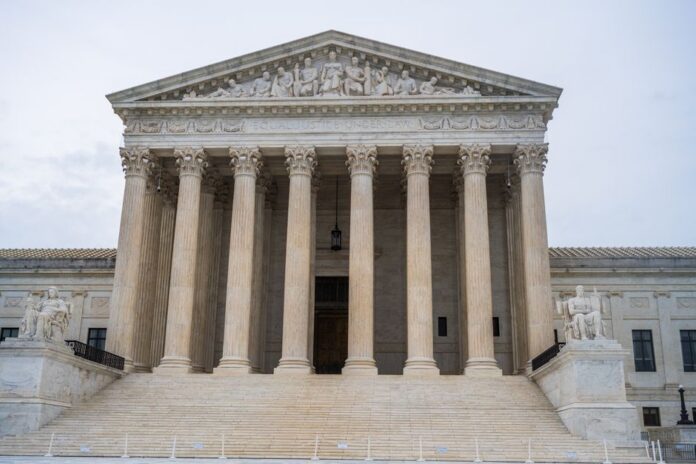
The Supreme Court’s decision to hear arguments signals that the justices recognize the profound implications of these border restrictions. Whatever ruling emerges from the marble halls of the nation’s highest tribunal will reverberate through immigrant communities, border towns, federal agencies, and the political landscape heading into future elections.
Key Takeaways
- The Supreme Court has agreed to consider the constitutionality and legality of asylum restrictions at the US-Mexico border
- The case represents a critical test of executive authority over immigration policy and federal government powers
- The outcome will directly affect thousands of migrants seeking asylum protection in the United States
- Border policy continues to dominate national news as communities grapple with immigration enforcement questions
- The ruling could establish precedent affecting how future administrations handle asylum claims at the southern border
- Legal experts view this as one of the most significant immigration cases to reach the high court in years
The Background & Context
Asylum law in America has long operated under a framework established by the 1980 Refugee Act, which aligned US policy with international treaties. Under this system, individuals who arrive at the border and express fear of persecution in their home countries have traditionally been entitled to a hearing before an immigration judge. The process allows them to present evidence supporting their claim that they face danger based on race, religion, nationality, political opinion, or membership in a particular social group.
Border restrictions have evolved dramatically over the past several administrations. Each president has grappled with surges in migration, resource constraints at processing facilities, and political pressure to either tighten or loosen asylum access. The restrictions now before the Supreme Court represent the latest chapter in this ongoing struggle to balance humanitarian obligations with border security concerns.
Immigration enforcement has become increasingly complex as migration patterns shift. Economic instability, gang violence, political upheaval, and climate-related disasters in Central America and beyond have driven waves of families and individuals northward. Processing facilities along the southern border have faced capacity challenges, leading to debates about whether restrictions serve as necessary management tools or unlawful barriers to protection.
The federal courts have become a recurring battleground for immigration policy. Lower courts have issued conflicting rulings on various border measures, creating a patchwork of enforcement standards that vary by jurisdiction. This legal uncertainty has left both migrants and enforcement officials operating in a state of confusion, underscoring the need for Supreme Court clarity.
Why This Matters
For American citizens, this case carries implications far beyond immigration law textbooks. Border policy affects local communities, state budgets, federal resources, and America’s standing in the world. Towns along the southern border experience the direct effects of migration flows, from strained social services to economic opportunities. Their residents deserve coherent, legally sound policies rather than whipsaw changes with each administration.
Taxpayers have a stake in how asylum systems function. Efficient, fair processing serves everyone better than prolonged detention or endless litigation. When asylum seekers wait months or years for hearings, costs mount. When restrictions push migrants toward dangerous illegal crossings rather than orderly processing, rescue operations and enforcement expenses climb. The Supreme Court’s ruling will help determine whether current approaches represent wise stewardship of public resources.
The separation of powers sits at the heart of this dispute. Congress writes immigration laws. The executive branch enforces them. Courts interpret them. When one branch appears to overstep its authority, the constitutional balance tilts. Americans across the political spectrum should care about maintaining proper checks and balances, regardless of whether they support stricter or more lenient asylum policies.
International credibility matters too. The United States has long positioned itself as a defender of human rights and refugee protection. How America treats asylum seekers sends signals to allies and adversaries alike. Policies that appear to violate international norms can complicate diplomatic relationships and undermine American moral authority on the global stage.
The human dimension cannot be ignored. Real families hang in limbo while courts deliberate. Children grow up in uncertainty. Individuals fleeing genuine persecution face potential return to danger. Even those who prioritize border security should want a system that efficiently identifies legitimate asylum claims while deterring fraudulent ones. The current legal ambiguity serves neither goal effectively.
Reactions & Analysis
Legal scholars have been watching this case with keen interest since lower courts first began wrestling with the restrictions. Constitutional law experts note that the Supreme Court has historically granted the executive branch considerable deference on immigration matters, viewing border control as inherently tied to national sovereignty and defense. Yet that deference has limits, particularly when policies appear to conflict with statutory requirements or constitutional protections.
Immigration advocacy organizations have mobilized in response to the case, arguing that asylum restrictions violate both US law and international treaty obligations. These groups contend that legitimate asylum seekers face insurmountable barriers under current policies, effectively closing the door to protection for vulnerable populations. They point to documented cases of individuals returned to dangerous situations after being denied the opportunity to present their claims fully.
Border security advocates counter that restrictions represent necessary tools to manage unprecedented migration flows and prevent abuse of asylum systems. They argue that many claims lack merit and that processing everyone who arrives would overwhelm already strained resources. From this perspective, restrictions help prioritize genuine refugees while discouraging economic migrants from exploiting humanitarian pathways.
State governments have lined up on both sides. Some attorneys general have filed briefs supporting the restrictions as essential to managing the impacts of migration on their communities. Others argue that the policies shift costs and chaos onto states without solving underlying problems. This division reflects broader regional and political fault lines that run through American society.
What Happens Next
The Supreme Court will hear oral arguments in the coming months, with a decision likely before the current term ends. The justices will examine whether the restrictions exceed executive authority, conflict with statutory asylum provisions, or violate constitutional due process requirements. Their ruling could be narrow, addressing only specific aspects of the challenged policies, or broad, establishing sweeping principles that govern asylum law for years to come.
Whatever the court decides, implementation will pose challenges. If justices strike down the restrictions, border agencies will need to adjust processing procedures quickly, potentially facing renewed surges in asylum applications. If the court upholds the policies, advocacy groups may pursue alternative legal strategies or push for congressional action to modify asylum statutes directly.
The political ramifications will ripple through upcoming elections. Immigration consistently ranks among voters’ top concerns. A Supreme Court ruling that energizes either base could shift electoral calculations. Candidates will face pressure to articulate positions on asylum policy with greater specificity, unable to hide behind legal uncertainty.
Longer term, this case may prompt Congress to revisit comprehensive immigration reform. Lawmakers have avoided tackling asylum law overhauls for years, allowing executive actions and court decisions to fill the void. A definitive Supreme Court ruling might finally create enough pressure to force legislative action, though partisan divisions make compromise difficult.
Frequently Asked Questions
What exactly are asylum restrictions at the border?
Asylum restrictions are policies that limit who can apply for asylum protection and under what circumstances. These can include requirements that asylum seekers first apply in other countries they passed through, restrictions based on how they entered the United States, or expedited removal procedures that reduce opportunities to present claims. The specific restrictions being challenged before the Supreme Court involve policies implemented at the US-Mexico border that advocates argue improperly deny access to asylum processes.
How does this case affect immigration enforcement more broadly?
The Supreme Court’s ruling will establish important precedents about executive authority over immigration policy and the federal government’s obligations under asylum law. A decision could clarify the limits of presidential power to restrict asylum access, affect how border agencies process migrants, and influence future immigration policies across administrations. The case touches on fundamental questions about the balance between border security and humanitarian protection.
When will the Supreme Court issue its decision?
While the exact timing remains uncertain, the Supreme Court typically hears cases during its October through April term and issues decisions before recessing in late June or early July. Given the significance of this immigration case and its appearance on the docket, observers expect a ruling before the current term concludes, though the court could potentially hold the case over if justices require additional time for deliberation.
What happens to asylum seekers while the case is pending?
During the Supreme Court’s consideration, existing policies generally remain in effect unless lower court injunctions have blocked them. This means asylum seekers at the border continue facing whatever restrictions are currently being enforced. Individuals in immigration proceedings may find their cases delayed as judges await clarity from the high court. Legal uncertainty often means prolonged waits for migrants seeking resolution of their status.
As the Supreme Court prepares to wade into this charged territory, Americans on all sides of the immigration debate share a common interest in legal clarity and workable policy. The justices hold in their hands the power to shape asylum law for a generation. Their decision will test whether the nation can balance its security concerns with its humanitarian traditions, and whether the rule of law can provide a framework that transcends partisan division. The eyes of the nation—and the world—will be watching.


