
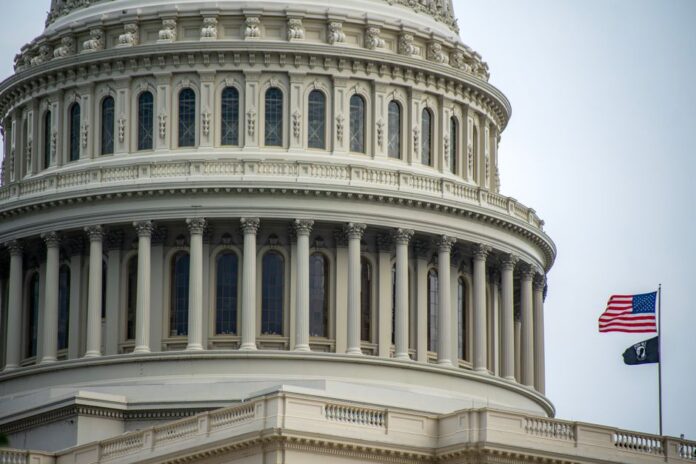
Photo: Ramaz Bluashvili / Pexels
By The News Beacon Newsroom, Politics Desk — Published September 13, 2026
Table of Contents
- Key Takeaways
- The Background & Context
- Why This Matters
- Reactions & Analysis
- What Happens Next
- Frequently Asked Questions
House Speaker Mike Johnson has indicated that Congress may attempt to deliver on former President Donald Trump’s campaign promise of $5,000 direct payments to American families. Yet Johnson stopped short of guaranteeing the checks will materialize. The cautious statement from the Republican leader highlights the complex political and fiscal realities facing lawmakers as they navigate competing priorities in a divided Washington.
Speaker Johnson says the legislative body would work toward fulfilling Trump’s pledge, according to recent reports. But the Speaker’s measured tone underscores the substantial hurdles any such proposal would face. From budget constraints to partisan disagreements over spending priorities, the path to putting thousands of dollars directly into Americans’ pockets remains uncertain at best.
The discussion comes at a time when many American households continue to feel economic pressure from inflation, high interest rates, and the lingering effects of pandemic-era disruptions. Direct payments have proven politically popular in recent years, yet they also carry significant fiscal implications that complicate their passage through Congress.
Key Takeaways
- House Speaker Mike Johnson stated Congress could work with Trump to deliver $5,000 checks to Americans, though he provided no guarantees the payments would actually happen
- The proposal stems from a campaign promise made by Donald Trump, raising questions about how such payments would be funded and implemented
- Johnson’s careful language reflects the political and budgetary challenges facing any large-scale direct payment program
- The discussion occurs amid ongoing economic concerns for American families dealing with inflation and cost-of-living pressures
- Any legislation to authorize such payments would require navigating complex Congressional procedures and securing sufficient votes in both chambers
- The absence of firm commitments suggests significant uncertainty about whether the proposal will advance beyond the discussion phase
The Background & Context
Direct payments to Americans became a familiar policy tool during the COVID-19 pandemic. Congress authorized multiple rounds of stimulus checks, with bipartisan support in some cases, to help households weather economic shutdowns and job losses. Those payments ranged from $600 to $1,400 per person, depending on the round of relief.
Trump’s proposal of $5,000 checks represents a substantially larger payment than previous stimulus efforts. During campaign events and political rallies, such promises resonate with voters struggling with everyday expenses. Gas prices, grocery bills, and housing costs have all increased significantly in recent years, making the idea of a substantial cash infusion appealing to many families.
However, the fiscal landscape has changed dramatically since the pandemic-era payments. The federal deficit has grown considerably, and concerns about government spending have intensified among fiscal conservatives in Congress. Interest payments on the national debt now consume a growing share of the federal budget, limiting lawmakers’ flexibility to authorize new spending programs.
Johnson, who represents Louisiana’s fourth congressional district, became Speaker in October 2023 following a tumultuous period in the House. His leadership has required balancing the demands of the Republican Party’s various factions, from fiscal hawks who oppose increased spending to populist members who favor direct aid to constituents. This balancing act becomes particularly delicate when addressing proposals that carry both political appeal and significant price tags.
The mechanics of delivering $5,000 to Americans would also present logistical challenges. Questions abound about eligibility criteria, income thresholds, and whether payments would go to individuals or households. A universal payment to all American adults would cost hundreds of billions of dollars, while means-testing to limit payments to lower and middle-income families would reduce costs but complicate administration.
Why This Matters
For millions of American families, the difference between promise and reality on this issue could be measured in thousands of dollars. A $5,000 payment would represent meaningful relief for households struggling with debt, facing unexpected medical bills, or simply trying to build emergency savings in uncertain times.
The political implications extend beyond individual bank accounts. Campaign promises carry weight with voters, who increasingly express frustration when elected officials fail to deliver on their commitments. Trust in government institutions has eroded over recent decades, and unfulfilled pledges contribute to that cynicism.
Economic data shows that many Americans lack sufficient emergency savings. Studies consistently find that a significant percentage of households would struggle to cover an unexpected $400 expense. For these families, a $5,000 payment could provide a crucial financial cushion or help pay down high-interest debt that constrains their monthly budgets.
Yet the fiscal stakes are equally significant. Adding hundreds of billions to the federal deficit could have long-term consequences for interest rates, inflation, and the government’s ability to fund other priorities. Social Security, Medicare, defense spending, and infrastructure investments all compete for limited federal dollars. Every major spending decision involves trade-offs that affect different constituencies in different ways.
The political dynamics also matter for the 2024 elections and beyond. How Congress handles this proposal could influence voter perceptions of both parties’ commitment to working families. Republicans must balance their traditional emphasis on fiscal restraint with populist pressure to deliver tangible benefits to their constituents. Democrats face similar tensions between progressive calls for direct aid and moderate concerns about deficit spending.
Reactions & Analysis
Johnson’s carefully worded statement reflects the precarious position he occupies. By saying Congress “could work” with Trump on the payments rather than “will work,” he leaves room for the proposal to quietly fade if political or fiscal obstacles prove insurmountable. This hedging protects him from accusations of breaking a promise while acknowledging the political pressure to at least explore the idea.
The lack of guarantees also signals that Johnson recognizes the practical difficulties. Passing any major legislation requires coordination between the House and Senate, presidential signature, and often compromises that dilute original proposals. With narrow margins in Congress, even small defections can doom legislation.
Budget experts and fiscal watchdog groups have historically raised concerns about large-scale direct payment programs outside of emergency contexts. They argue that such payments can fuel inflation if they increase consumer demand without corresponding increases in the supply of goods and services. The pandemic-era stimulus checks sparked debate about their role in the inflation surge that followed.
Political analysts note that Trump’s promise and Johnson’s response both reflect the populist currents flowing through American politics. Voters across the ideological spectrum have expressed frustration with economic elites and desire policies that directly benefit working and middle-class families. Direct payments represent a straightforward, visible form of government assistance that contrasts with more complex policy interventions.
What Happens Next
The immediate future likely involves more discussion than action. Congressional leaders must first determine whether there is genuine appetite among members to pursue such legislation. Committee hearings could examine the costs, benefits, and implementation challenges of various payment scenarios.
Any serious legislative effort would require drafting specific bill language that addresses eligibility, funding sources, and distribution mechanisms. The Congressional Budget Office would need to score the proposal, providing official estimates of its fiscal impact. Those numbers would then become ammunition for both supporters and opponents in the debate.
Political calculations will heavily influence whether this proposal advances. If polling shows strong public support, pressure on lawmakers to act would increase. Conversely, if voters prioritize other issues or express concern about deficit spending, the proposal could quietly disappear from the legislative agenda.
The 2024 election results will also shape the landscape. Changes in party control or shifts in congressional margins could either facilitate or obstruct efforts to pass payment legislation. Presidential priorities matter too, as any bill would ultimately require executive approval.
Alternative proposals may emerge as well. Rather than $5,000 direct payments, Congress might consider targeted tax credits, expanded child tax credit payments, or other forms of assistance that achieve similar goals with different mechanisms. Legislative compromise often produces outcomes that bear little resemblance to initial proposals.
Frequently Asked Questions
Would every American receive a $5,000 check under this proposal?
The specifics remain undefined. Typically, such programs include income limits that phase out payments for higher earners. Previous stimulus checks excluded individuals earning above certain thresholds. The proposal would need detailed legislation specifying eligibility criteria, whether payments go to individuals or households, and how dependents are treated.
How would Congress pay for $5,000 payments to Americans?
Funding mechanisms have not been specified. Options include deficit spending, cutting other programs, raising taxes, or some combination. The total cost would depend on eligibility criteria but could easily reach hundreds of billions of dollars for a broad-based program. Congressional budget rules would require identifying funding sources or waiving those rules through special procedures.
When might Americans see these payments if Congress approves them?
No timeline exists because the proposal remains in the discussion phase. Even if Congress acted quickly, drafting legislation, securing passage in both chambers, and implementing a payment system would take months at minimum. Previous stimulus payments took weeks to distribute after legislation passed, and a larger payment amount might require additional preparation time.
What are the chances Congress will actually pass this legislation?
Speaker Johnson’s refusal to guarantee the payments suggests significant uncertainty. Major spending legislation faces numerous obstacles, including partisan disagreement, fiscal concerns, and competing priorities. While direct payments poll well with voters, translating that support into legislative action requires overcoming substantial political and procedural hurdles that have blocked many popular proposals in the past.
As this story develops, American families will be watching closely to see whether campaign promises translate into legislative reality. The gap between what politicians say on the trail and what they can deliver in office has rarely been more visible. Whether Congress bridges that gap on $5,000 checks remains an open question with significant implications for millions of households and the political landscape alike.


