
⏱️ 6 min read
Did You Know? 10 Facts About Quantum Sensors
Quantum sensors represent one of the most exciting frontiers in modern technology, harnessing the strange and powerful properties of quantum mechanics to measure physical quantities with unprecedented precision. These revolutionary devices are transforming fields ranging from medical diagnostics to navigation systems, offering capabilities that were once thought impossible. As quantum technology continues to advance, quantum sensors are poised to become integral to our technological infrastructure. Here are ten fascinating facts about quantum sensors that demonstrate their remarkable potential and growing importance.
1. Quantum Sensors Exploit Quantum Superposition
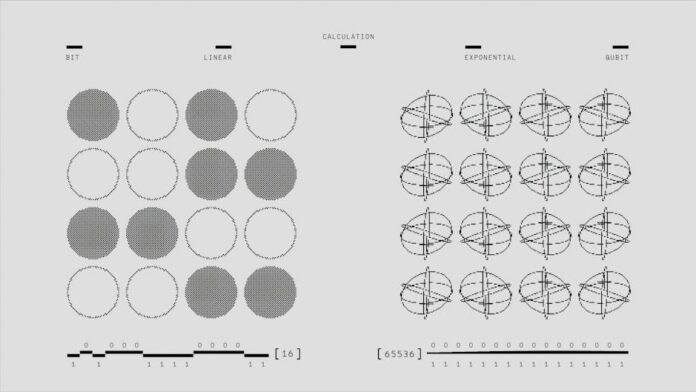
At the heart of quantum sensor technology lies the principle of quantum superposition, where particles can exist in multiple states simultaneously until measured. Unlike classical sensors that measure one state at a time, quantum sensors leverage this property to gather information about multiple possibilities at once. This fundamental advantage allows quantum sensors to achieve measurement precision that far exceeds conventional sensors. By maintaining particles in superposition states, these devices can detect incredibly subtle changes in their environment, making them invaluable for applications requiring extreme sensitivity.
2. They Can Detect Gravitational Variations
Quantum gravimeters represent a groundbreaking application of quantum sensing technology. These devices can measure minuscule variations in gravitational fields with extraordinary accuracy, detecting changes as small as one part in a billion. This capability has profound implications for geological surveying, allowing scientists to map underground structures, locate mineral deposits, and monitor volcanic activity without invasive drilling. The technology works by measuring how gravity affects the quantum states of atoms in free fall, providing data that was previously impossible to obtain with such precision.
3. Medical Diagnostics Are Being Revolutionized
Quantum sensors are transforming medical imaging and diagnostics in remarkable ways. Quantum magnetometers, for instance, can detect the incredibly weak magnetic fields produced by the human brain and heart with unprecedented sensitivity. These sensors enable magnetoencephalography (MEG) systems that don’t require the bulky, expensive superconducting equipment of traditional devices. This advancement could make brain imaging more accessible and affordable, potentially revolutionizing the diagnosis and treatment of neurological conditions, from epilepsy to Alzheimer’s disease.
4. Navigation Without GPS Is Possible
One of the most strategically important applications of quantum sensors is quantum-enhanced inertial navigation. While GPS systems are incredibly useful, they can be jammed, spoofed, or are simply unavailable in certain environments like underwater or underground. Quantum accelerometers and gyroscopes can track position and orientation with such precision that they enable accurate navigation for extended periods without any external reference signals. This technology is particularly valuable for submarines, autonomous vehicles, and aerospace applications where GPS reliability cannot be guaranteed.
5. They Operate at Extreme Sensitivity Levels
Quantum sensors can detect phenomena at sensitivity levels that approach fundamental physical limits. Some quantum sensors can measure magnetic fields billions of times weaker than Earth’s magnetic field, detect temperature changes of millionths of a degree, or measure time intervals with femtosecond precision. This extreme sensitivity stems from the delicate nature of quantum states, which are easily disturbed by even the slightest environmental changes. By carefully controlling and measuring these disturbances, researchers can extract information about physical quantities with astonishing accuracy.
6. Quantum Entanglement Enhances Performance
Many advanced quantum sensors utilize quantum entanglement, where two or more particles become correlated in ways that have no classical equivalent. When particles are entangled, measuring one instantly affects the others, regardless of distance. This property allows quantum sensors to surpass the “standard quantum limit” that constrains classical sensors. Entanglement-enhanced sensors can achieve precision improvements that scale more favorably with the number of particles involved, opening possibilities for measurements that would be impossible with classical technology.
7. They’re Being Used to Find Hidden Objects
Quantum sensors excel at detecting objects and structures that are invisible to conventional sensors. Quantum radar and quantum lidar systems can potentially detect stealth aircraft and submarines by exploiting quantum correlations that are resistant to countermeasures. In archaeology and civil engineering, quantum gravimeters can reveal buried structures, ancient ruins, and subsurface voids without excavation. Underground utility companies are exploring quantum sensors to map pipes and cables more accurately, reducing the risk of accidental damage during construction work.
8. Room-Temperature Operation Is Advancing
While many early quantum sensors required extremely cold temperatures near absolute zero to function, recent breakthroughs have enabled room-temperature operation for certain types of quantum sensors. Nitrogen-vacancy (NV) centers in diamond, for example, can serve as quantum sensors that work at ambient temperatures. These diamond-based sensors can measure magnetic fields, electric fields, temperature, and pressure with quantum precision without cryogenic cooling systems. This development is crucial for making quantum sensing technology more practical and widely deployable in real-world applications.
9. Atomic Clocks Represent Quantum Timing Sensors
The most mature and widely deployed quantum sensors are atomic clocks, which use the quantum properties of atoms to measure time with extraordinary precision. Modern optical atomic clocks are so accurate that they would lose less than one second over the entire age of the universe. These quantum timing sensors are essential for GPS systems, telecommunications networks, and financial trading platforms. They also enable fundamental physics research, including tests of Einstein’s theory of relativity and searches for variations in fundamental constants of nature.
10. The Market Is Rapidly Expanding
The quantum sensor market is experiencing explosive growth, with projections suggesting it will reach billions of dollars within the next decade. Governments and private companies worldwide are investing heavily in quantum sensing technology, recognizing its strategic and commercial importance. Applications are expanding beyond research laboratories into practical commercial products for industries including healthcare, defense, energy, transportation, and environmental monitoring. As manufacturing techniques improve and costs decrease, quantum sensors are expected to become increasingly commonplace in everyday technology.
Conclusion
Quantum sensors represent a paradigm shift in our ability to measure and understand the physical world. From detecting gravitational anomalies deep underground to enabling GPS-free navigation and revolutionizing medical diagnostics, these ten facts illustrate the transformative potential of quantum sensing technology. As research progresses and devices become more practical and affordable, quantum sensors will undoubtedly play an increasingly vital role in science, industry, and daily life. The quantum sensing revolution is not a distant future prospect—it is happening now, promising to unlock new possibilities that will reshape technology and expand the boundaries of human knowledge and capability.


