
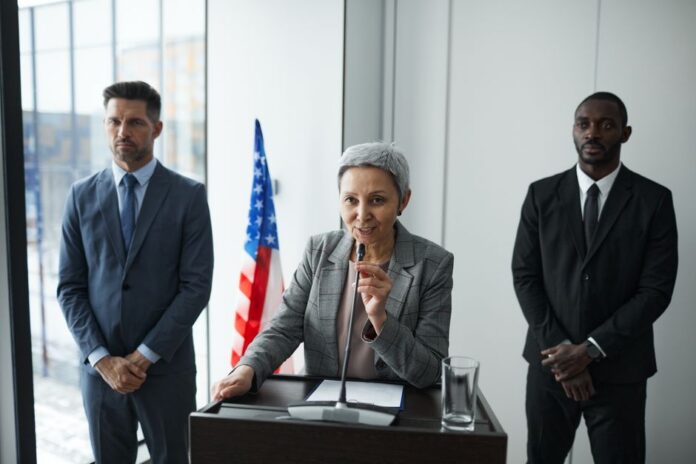
Photo: Werner Pfennig / Pexels
By The News Beacon Newsroom, Politics Desk — Published October 17, 2026
Table of Contents
- Key Takeaways
- The Background & Context of White House Press Communications
- Why This Matters to American Voters and Taxpayers
- Reactions & Analysis from Media and Political Observers
- What Happens Next for White House Communications
- Frequently Asked Questions
The White House press secretary position has become a revolving door barely a week into the new administration. Katie Zacharia, who stepped into the high-profile role representing the administration to the American public, found herself out of a job just five days after taking the podium. Her abrupt departure follows mounting questions about her qualifications and a controversy over social media posts that referred to her as an attorney—despite having failed the bar exam.
The swift firing marks one of the most turbulent starts for any White House press secretary in recent memory. According to multiple reports, Zacharia’s brief tenure was so problematic that even typically friendly media outlets raised concerns. The situation highlights broader questions about vetting processes, credibility, and the critical role of the person tasked with communicating administration policy to millions of Americans.
For voters and taxpayers who rely on accurate information from the White House, the episode raises uncomfortable questions. How does someone who failed the bar exam end up sharing posts identifying herself as an attorney? And what does this say about the administration’s hiring standards for one of its most visible positions?
Key Takeaways
- Katie Zacharia was removed as White House press secretary after only five days on the job, marking one of the shortest tenures in the position’s history.
- Reports indicate Zacharia failed the bar exam but shared or allowed social media posts that identified her as an attorney, raising questions about credential misrepresentation.
- Her first week was marked by such significant difficulties that even traditionally supportive news outlets, including Fox News, began questioning her performance and qualifications.
- The controversy touches on broader concerns about transparency, vetting procedures, and the credibility of White House communications during a time when public trust in government institutions remains fragile.
- The firing comes at a critical juncture when the administration needs to establish clear messaging on policy priorities, legislation, and campaign promises to Congress and the American people.
- The episode underscores the high stakes of the press secretary role, where even minor missteps can snowball into major credibility issues for an entire administration.
The Background & Context of White House Press Communications
The White House press secretary serves as the primary conduit between the executive branch and the American public. This person briefs journalists daily, explains policy decisions, defends controversial actions, and attempts to shape the national conversation around the administration’s agenda. The role demands not just communication skills but unimpeachable credibility.
Historically, successful press secretaries have combined media savvy with substantive policy knowledge and personal integrity. They face hostile questioning. They must think on their feet. Most importantly, they must be trusted—by reporters, by the public, and by the president they serve. When that trust erodes, the entire communications apparatus suffers.
The bar exam controversy cuts to the heart of this trust equation. In legal circles, claiming attorney status without having passed the bar constitutes a serious ethical violation. Most states prohibit individuals from representing themselves as lawyers unless they are licensed to practice law. While working as a press secretary does not require a law degree, misrepresenting one’s credentials in any context raises red flags about judgment and honesty.
Reports indicate that social media posts circulated identifying Zacharia as an attorney. Whether she personally made these claims or simply failed to correct them remains unclear from available information. Either scenario presents problems. Active misrepresentation would be disqualifying. Passive acceptance of false credentials suggests poor judgment at minimum.
The situation became untenable remarkably quickly. Within five days of taking the podium, Zacharia was out. According to reports, her performance during that brief window was so concerning that even Fox News—often viewed as sympathetic to the administration—began raising questions. When friendly media outlets start expressing doubts, the political calculus changes dramatically.
Why This Matters to American Voters and Taxpayers
This controversy extends far beyond palace intrigue or Washington gossip. The credibility of White House communications directly affects every American who relies on accurate information to make decisions about their lives, their votes, and their trust in government.
Consider the practical implications. When a press secretary speaks, they are explaining policies that affect healthcare, taxes, national security, and countless other issues that touch daily life. If the person delivering those messages cannot be trusted with basic facts about their own background, how can citizens trust the information they provide about complex legislation or international crises?
The timing compounds the problem. Early weeks of any administration are critical for establishing credibility and momentum. Campaign promises must translate into legislative priorities. Relationships with Congress need nurturing. Public opinion can shift rapidly based on how effectively the White House makes its case. A press secretary in chaos undermines all of these objectives.
For taxpayers, there is also a resource question. The vetting process for senior White House positions consumes significant time and money. Background checks, security clearances, and credential verification all require investment. When someone slips through with questionable qualifications, it suggests either inadequate procedures or willful disregard of red flags. Neither option inspires confidence.
The episode also feeds into broader concerns about truth and accountability in politics. In an era when misinformation spreads rapidly and public trust in institutions has declined, the White House must hold itself to the highest standards. Credential inflation or misrepresentation—even in seemingly minor ways—erodes the moral authority needed to call out falsehoods elsewhere.
Reactions & Analysis from Media and Political Observers
The speed of Zacharia’s departure speaks volumes about how seriously the administration viewed the situation. Five days represents barely enough time to learn where the bathrooms are, let alone to commit fireable offenses under normal circumstances. The swift action suggests either that the problems were severe or that the administration recognized a growing crisis that required immediate damage control.
According to reports, Fox News—a network often aligned with conservative administrations—raised questions about Zacharia’s rocky first week. When even sympathetic outlets begin expressing concerns, it signals that the problems have moved beyond partisan spin into territory that threatens basic credibility. Fox News asking tough questions about a press secretary’s qualifications represents a significant development that likely accelerated the decision to make a change.
The bar exam detail adds a particularly troubling dimension. Legal credentials carry weight in Washington, where many senior officials hold law degrees and where policy debates often hinge on constitutional questions. Falsely claiming attorney status—or allowing others to make that claim without correction—crosses a bright ethical line that most observers find indefensible.
Political analysts note that the controversy distracts from substantive policy discussions the administration presumably wants to emphasize. Instead of talking about legislative priorities or executive actions, the White House finds itself explaining a personnel disaster. This kind of self-inflicted wound can be particularly damaging because it suggests incompetence rather than ideological disagreement.
What Happens Next for White House Communications
The immediate priority is finding a replacement who can restore credibility and stability to the press secretary role. This person will inherit a skeptical press corps and a public already questioning the administration’s judgment. The learning curve is steep, and the margin for error has shrunk considerably.
Longer term, the episode will likely prompt questions about vetting procedures. How did someone with questionable credentials make it through the screening process? Were warning signs ignored? Did political considerations override due diligence? Congress may seek answers, particularly if oversight committees believe taxpayer resources were wasted or if the situation points to broader problems in personnel management.
For the administration’s policy agenda, the distraction comes at an inopportune moment. Early months are when political capital is highest and when legislative momentum can be built. Every day spent managing a communications crisis is a day not spent advancing campaign promises or building coalitions for priority bills. The opposition will seize on the chaos as evidence of broader dysfunction.
The incident also sets a precedent. Future nominees for senior communications roles will face heightened scrutiny. Credentials will be verified more carefully. Social media histories will be combed for potential problems. While this additional diligence is probably healthy, it also slows the process of filling critical positions and may deter some qualified candidates who fear invasive scrutiny.
Public trust, once damaged, repairs slowly. Even with a new press secretary in place, reporters will remember this episode. Questions about credibility will linger. The administration will need to demonstrate through consistent, honest communication over time that this was an aberration rather than a pattern.
Frequently Asked Questions
What exactly does the White House press secretary do?
The White House press secretary serves as the official spokesperson for the administration, conducting daily briefings with journalists, explaining policy decisions, and representing the president’s positions on issues ranging from domestic legislation to international crises. The role requires balancing transparency with message discipline while maintaining credibility with both the media and the public.
Is it illegal to claim you are an attorney if you failed the bar exam?
While the specific legal consequences vary by state, representing oneself as a licensed attorney without having passed the bar exam and being admitted to practice law is generally prohibited and can constitute unauthorized practice of law. Such misrepresentation can result in civil penalties and, in some jurisdictions, criminal charges. It also violates professional ethics rules even for those who attended law school but never passed the bar.
How long do White House press secretaries typically serve?
White House press secretaries typically serve for one to three years, though tenure varies widely based on political circumstances, personal decisions, and administration needs. Some have served entire presidential terms, while others have lasted only months. However, a five-day tenure is extraordinarily short and represents a significant outlier in the position’s history.
Can this controversy affect the administration’s ability to govern effectively?
Yes, credibility problems with the press secretary can undermine the administration’s broader effectiveness. When the public and media question the honesty of official communications, it becomes harder to build support for policy initiatives, maintain relationships with Congress, and respond effectively to crises. Trust is the currency of political communication, and once spent, it is difficult to rebuild.
The rapid rise and fall of Katie Zacharia as White House press secretary will likely be studied as a cautionary tale about the importance of thorough vetting and the unforgiving nature of high-stakes political communications. For an administration trying to establish its footing and advance its agenda, the episode represents a costly stumble. The American public, meanwhile, is left hoping that lessons are learned and that future appointments to this critical position will better serve the cause of transparent, credible governance.


